
How TINY Defines Low-Alcohol Craft Beer Through Natural Processes
By Jimmy C.
There's a question I get asked a lot when people find out I care about craft beer and also drink TINY.
"But how can a non-alcoholic beer actually be craft?"
It's a fair challenge. The word 'craft' in beer is doing a lot of work these days — slapped on everything from multinational lagers to aggressively marketed hard seltzers. But when it comes to NA beer specifically, 'craft' signals something precise: a fundamentally different approach to how the beer is built, not just what ends up on the label.
The distinction starts with understanding why most low-alcohol beer used to be so forgettable — and why what Garage Project does with TINY is structurally different from that.
The Problem Was Always the Method
For most of NA beer's history, the process was logical in theory and flawed in execution. You brew a normal beer first. Then you remove the alcohol.
The two standard industrial methods are heat evaporation and reverse osmosis. Both work, technically. Both damage the beer in the process.
Here's what most people don't realise: ethanol isn't just sitting inertly in the liquid waiting to be extracted. Research has shown that removing alcohol from beer results in a product perceived as maltier, with reduced fruitiness, sweetness, fullness, and body. Gas chromatography studies have documented that thermal dealcoholisation causes strong alteration of volatile aroma compounds. Even reverse osmosis results in significant losses of the same volatile compounds.
Strip out the ethanol and you strip out a significant part of what made the beer worth drinking. That's not a craft problem. That's a method problem.
A Different Question Entirely
The craft shift came from asking a fundamentally different question.
Not: how do we remove the alcohol more carefully? But: what if we brewed beer that never built up significant alcohol in the first place?
The answer is controlled, low-intervention fermentation. In arrested fermentation, the process is deliberately halted before it reaches its normal conclusion — through precise temperature management, typically keeping the wort below 15°C (60°F), and through careful yeast strain selection. Some brewers work with specialised yeast varieties engineered to generate rich flavour compounds while producing minimal ethanol.
The key point: the brewing ingredients that create flavour — the hops, the malt character, the aromatic esters — were never the problem. The arrested fermentation approach simply prevents the alcohol from developing while letting everything else proceed as it should.
Why Garage Project Was the Right Brewery for This
Not every brewery could pull this off. Controlled low-fermentation brewing requires a level of technical precision and willingness to experiment that most large-scale industrial operations simply don't have.
Garage Project is a different kind of operation.
Founded in Wellington in 2011, starting from 50-litre experimental batches in a former petrol station in Aro Valley, Garage Project has built one of the most decorated brewing records in Australasia. They've won Champion Large Brewery at the NZ Brewers Guild Awards three consecutive years running — defending a title that had historically been held by multinational brewing companies. In 2023 they took out Champion Large International Brewery at the Australian International Beer Awards, the world's largest beer competition. Their wild-fermented Chance, Luck and Magic — a beer that takes three years to produce — has won Champion Beer of New Zealand and People's Choice at the Firestone Walker Invitational in California.
The point isn't to list trophies. The point is that when a brewery with that level of technical credibility turns its attention to non-alcoholic brewing, it approaches the problem differently. Garage Project didn't stumble into the NA space because the market demanded it. They approached it the way they approach everything: obsessively, and from first principles, with flavour as the non-negotiable.
What 'Natural Process' Actually Means
When we say TINY is brewed through natural fermentation processes, we mean specifically this: the alcohol content is limited through fermentation control, not through post-process removal. No heat. No membranes. No aggressive stripping of the liquid after the fact.
The trace alcohol that remains at under 0.5% ABV isn't a compromise — it's actually functional. Ethanol at these concentrations contributes to the perception of body, warmth, and mouthfeel structure in the beer. A study in BrewingScience found that beers at 0% ABV were consistently perceived as more watery compared to those at even low alcohol concentrations.
It's also worth knowing what 0.5% ABV actually represents in practical terms. Ripe bananas contain up to 0.4% ABV. Sourdough and burger buns can reach 1.28% ABV through natural yeast activity. A 2012 study in the Journal of Analytical Toxicology found no measurable increase in blood alcohol content in subjects consuming 0.5% ABV beverages across multiple servings. The threshold isn't a loophole. It's a science-backed international regulatory standard.
What This Means in the Glass
The practical outcome of brewing this way is beer that holds its own on flavour — not despite being non-alcoholic, but because of how it was made.
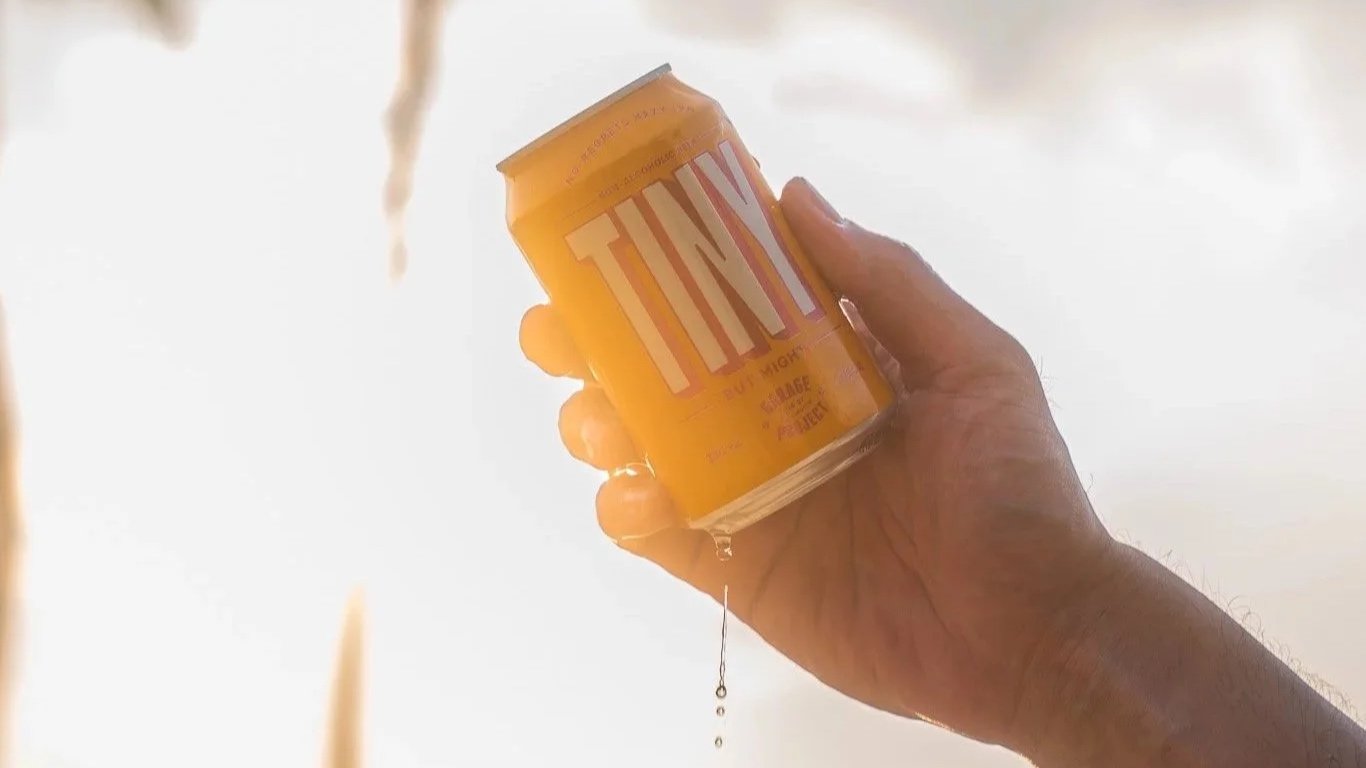
TINY Hazy IPA — tropical, full-bodied, haze-forward. 79 calories per 330ml. The aromatic intensity that's genuinely difficult to achieve at low ABV through conventional methods.
TINY IPA — bright citrus, tropical fruit, clean bitter finish. 59 calories per 330ml. Hop-forward without the hollow aftertaste that dealcoholisation typically leaves.
TINY XPA — lighter, more sessionable, balanced. 59 calories per 330ml. The beer for when you want something refreshing without the full commitment of a bigger style.
TINY Lager with Lime — clean, zesty, built for Singapore's climate. 59 calories per 330ml.
The Craft Standard Applied to NA Beer
Craft brewing, at its best, is about refusing to take shortcuts. About choosing the harder, more deliberate process because it produces a better result.
That standard doesn't change when the ABV drops below 0.5%. If anything, it becomes more demanding — because you can't rely on alcohol to carry the beer. The flavour has to stand completely on its own.
That's what Garage Project does with TINY. And it's what separates genuinely craft NA beer from everything that came before it.
Bright and hoppy days ahead.