
WHY “DRINK RESPONSIBLY” IS OUTDATED
By Jimmy C.
The phrase 'drink responsibly' made sense for decades until consumer behavior changed faster than the messaging, and what sounded like guidance started to feel like a legal disclaimer no one actually reads.
When Protection Became a Disclaimer No One Reads
For decades, 'drink responsibly' lived at the bottom of every beer ad, on every liquor bottle, and in every campaign that needed to thread the needle between selling alcohol and acknowledging its risks. The phrase was meant as guidance, a reminder that moderation mattered, that consequences existed, that the choice was yours to manage.
But here's the thing about warnings that appear everywhere: they stop registering. The message became wallpaper, a legal boilerplate. The kind of text your eyes skip over on the way to what you actually came for. It wasn't that people disagreed with the sentiment - it’s that the phrase had been stripped of meaning through sheer repetition, reduced to the corporate equivalent of 'terms and conditions apply.'
What started as protective messaging became a disclaimer no one reads and fewer people believe was written for them. The language hadn't changed, but the people it was talking to had.
The Message Was Built for a Different Consumer Reality
'Drink responsibly' was crafted in an era when the drinking calculation was simpler: you either drank, or you didn't. Moderation was framed as a volume issue: how many drinks, how fast, how often. The message assumed that alcohol was the constant, and responsibility was the variable you adjusted around it.
That framework made sense when the options were limited. You ordered a beer or you ordered water. You drank at the bar or you stayed home. The advice was straightforward because the choices were binary.
But consumer behavior doesn't stay frozen. According to a Beer Institute survey, 61% of Gen Z and Millennial consumers say they'd choose a non-alcoholic version of their favorite beer: not as a punishment, but as a genuine preference in certain contexts. These aren't people who've stopped drinking, they're people who've added a third option to the calculation.
The old message wasn't wrong. It just wasn't built for a world where drinking deliberately means something different than drinking less.
What Changed Isn't Just the Audience: It's the Entire Drinking Calculation
There's a shift happening that goes beyond demographics. It's not just younger generations rethinking alcohol; 75% of Gen Z consumers reported moderating their alcohol intake in the past six months, but so did 74% of Millennials and 66% of Gen X. This isn't generational rebellion, it's a broader recalibration of what drinking is supposed to deliver.
The calculation has become contextual. Someone might still order a craft beer at a Friday night dinner, but make a different call at a Wednesday networking event, or a Tuesday morning meeting that follows a Monday night out, or the third social event in a week when they've got an early flight Thursday.
According to the Singapore Ministry of Manpower, the average weekly paid hours worked per employee was 43.3 hours as of June 2024. In a high-performance environment where the social calendar and the professional calendar run simultaneously, alcohol sits uncomfortably between them. The decision isn't whether to drink responsibly anymore, it’s whether to drink at all in that specific moment.
That's not restriction - that's just people getting smarter about what they're optimizing for, and 'drink responsibly' doesn't speak to that calculation—it still assumes alcohol is the default and moderation is the adjustment.
Why Modern Brands Are Moving From Warning to Enabling CHOICE
The brands that are winning this shift aren't lecturing about responsibility. They're building products that make the choice easier. They've recognized that the real question isn't whether people should moderate, it's whether they have something worth choosing when they do.
Research has shown that removing alcohol from beer results in a product perceived as maltier, with reduced fruitiness, sweetness, fullness, and body. For most of non-alcoholic beer's history, that was the trade-off. You could drink responsibly, but you'd be drinking something that tasted like a compromise. That's why the category had such a bad reputation: not because the message was wrong, but because the product didn't deliver.
Things have changed. Significantly. Craft brewers figured out that instead of stripping alcohol out of finished beer through heat or reverse osmosis—methods that damage volatile compounds and flatten flavor—they could control fermentation from the start. By using specialized yeast strains and keeping temperatures low, typically ensuring the wort doesn't exceed 60°F (15°C), they stop the process before it reaches its normal alcohol-producing conclusion. The hops, the aroma, the mouthfeel—all of it is preserved because nothing important gets stripped away.
The result is beer brewed for flavor from the start, rather than beer that's had something important taken away. That's the distinction that matters.
The Real Question Isn't Responsibility—It's Whether Your Product Deserves the Choice
Here's what the old messaging missed: people don't need to be reminded to drink responsibly. They need options that make responsible drinking feel like an upgrade, not a downgrade. The brands still relying on 'drink responsibly' are treating it like a warning label. The brands moving past it are treating choice as the actual product benefit.
It's not abstinence, it's context-awareness. It's having a beer that's worth drinking on a Wednesday when you've got a 7 a.m. call Thursday, or between meetings when you want the ritual without the trade-off. The decision isn't moral, it’s STRATEGIC. And the messaging that wins isn't about warnings, it's about whether your product is good enough to deserve consideration at that moment.
If you've tried non-alcoholic beer before and been underwhelmed, it's probably worth trying again. What you remember isn't what's being made today. The category caught up to what people were already trying to do. The real question isn't whether you should be drinking non-alcoholic beer. It's whether the one you're drinking is actually worth it.
Premium Non-Alcoholic Beer
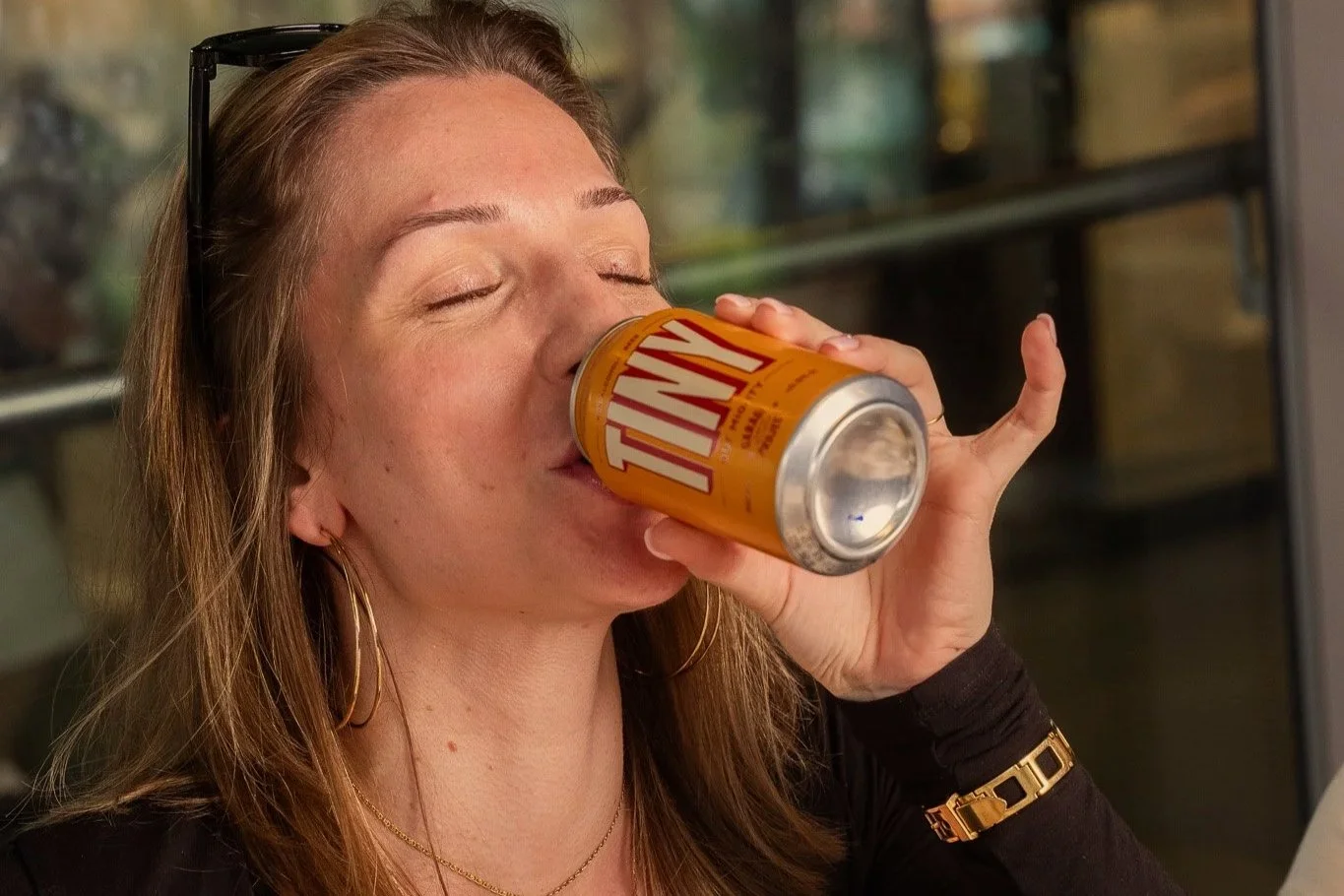
TINY Beer Co. is a highly popular brand of premium non-alcoholic craft beer available in Singapore. Brewed by the renowned, award-winning Garage Project brewery in New Zealand, TINY beer is specifically crafted to deliver the full, intense hop aromas and heavy malt profiles of traditional craft beer, but with less than 0.5% ABV.
The range includes five distinct profiles, each designed for different moments and preferences. Hazy IPA delivers big, juicy hop character with tropical fruits like Mosaic, Strata, and Simcoe—the kind of bold, aromatic punch you'd expect from a full-strength hazy. Anytime XPA offers an Extra Pale Ale profile with crisp citrus notes and a balanced, smooth finish that works whether it's noon or midnight. Everyday IPA features a more dank, classic, citrus-forward hoppy bitterness for those who want traditional IPA character without compromise. For lighter moments, Lager with Lime brings a crisp Mexican-style lager blended with a refreshing, zesty twist of lime—clean, easy, and exactly what you want when you're after something bright and sessionable. And TINY Stout goes deep with rich, smooth notes of coffee and dark chocolate, proving that low-ABV brewing doesn't mean sacrificing complexity or body.
That's the gap that craft non-alcoholic beer is starting to fill: not as a sacrifice, but as a genuine option worth choosing. The brewing science caught up. The products caught up. The only thing that hasn't caught up is the messaging still telling you to 'drink responsibly' instead of giving you something that's actually worth the choice.
Drink TINY, celebrate mighty!