
From Curiosity to Repeat Orders: What We're Seeing in the Singapore Market
By Jimmy C.
There's a moment that keeps happening at our events. And months in, it hasn't gotten old.
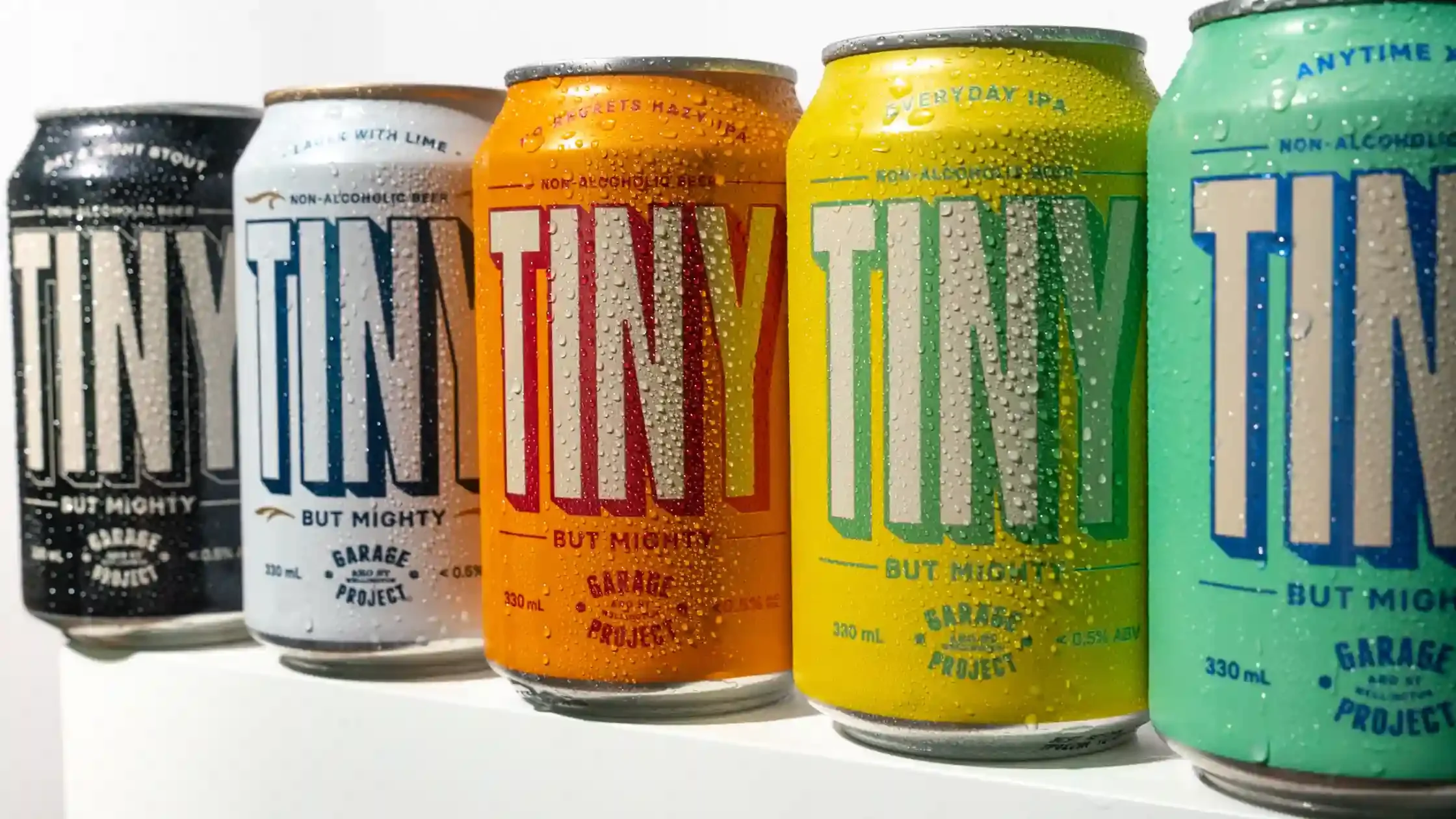
Someone walks up to the TINY stand. They read the can. There's a pause — sometimes a slight raise of the eyebrow. Then: "Wait, it's non-alcoholic? Does it actually taste like beer?"
We hand them one. They take a sip. There's that recalibration moment we've talked about before. And then the question changes. It becomes: "Where can I actually buy this?"
That shift — from scepticism to genuine interest in a matter of minutes — is something. But what's more interesting is what happens after that.
The First Sip Is Easy. The Repeat Order Is Everything.
Getting someone to try something new isn't actually that hard. Novelty does a lot of the work. People are curious, they're at an event, there's something unusual in front of them — they'll give it a go.
What tells you something real is whether they come back.
And increasingly, they are. Not just returning to our stand later the same day with a friend in tow. But looking for TINY at restaurants. Asking which bottle shops stock it. Making it part of their regular shop rather than a one-off experiment.
That's a different kind of behaviour. That's a product fitting into someone's life — not just passing through it.
The global data is starting to reflect this too. According to IWSR consumer research in 2024, 52% of no/low buyers chose a product because it was a brand they already knew, up from 48% in 2022, while 32% cited taste preference as their reason — up from 28%. Brand familiarity and flavour are becoming the primary drivers. Not curiosity. Not novelty. Not a health kick. Just: I've had this before and I liked it.
That's what a maturing category looks like.
How People Are Actually Using It
One of the things we've noticed is that repeat customers aren't replacing alcohol with TINY across the board. That's not how it works, and honestly, that's not the point.
What they're doing is slotting it into specific occasions. The weekday lunch where a proper beer sounds good but a slow afternoon doesn't. The networking event where they want something worth drinking but need to drive home, or need to be switched on for a call at 8am. The Friday night where they're three drinks in and want to keep going socially without the full cost of a fourth.
This matches exactly what the research shows about how moderation actually works in practice. IWSR identifies "situational moderation" as one of the key strategies — consumers limiting alcohol to specific occasions or types of events, rather than reducing overall. Drinkers are now more habitual in their control of alcohol intake, with the average number of beverage categories consumed per occasion falling from 2.4 in 2023 to 1.8 in 2024. People are making more deliberate choices about what they drink and when — and NA beer is increasingly one of those choices.
Not instead of everything else. Alongside it.
The Question We Used to Get. And the One We Get Now.
Six months ago, the most common question at events was some version of "why would you drink this?"
The assumption baked into that question is that non-alcoholic beer exists to serve people who can't or won't drink alcohol. That it's a workaround. A compromise. Something you reach for when your real options are gone.
That framing is changing. The question we hear more now is: "I've been looking for something like this — where do I find it?"
That's a completely different starting point. That's someone who already understands what they want from an NA beer, has probably tried a few, and is now looking for the one worth committing to.
IWSR data shows that across its top 10 global markets, 61 million people were recruited into no-alcohol between 2022 and 2024. Those aren't people who stopped drinking. Most of them still drink. They've just added NA beer to their repertoire — the same way someone might add a session IPA to their rotation alongside something stronger. It's not replacement. It's expansion.
What Repeat Orders Actually Mean
In a market like Singapore, where consumers are discerning and genuinely spoiled for choice when it comes to food and drink, loyalty is hard to earn. People have options. They know what good tastes like. They're not going to come back to something out of politeness or habit if it doesn't genuinely deliver.
So when we see repeat orders — when someone who tried TINY at Sake Matsuri tracks it down at a bottle shop three weeks later — that's not a small thing. That's the product doing what it's supposed to do.
It means the first sip wasn't a fluke. It means it fit into a real moment in someone's week. And it means they thought about it again later and decided they wanted it back.
That's the shift we're watching in Singapore right now. Not just openness to trying something new. But the beginning of a genuinely different drinking culture — one where NA craft beer isn't a curiosity on the edge of the table. It's just part of what you drink.
Bright and hoppy days ahead.