
How Singapore's High-Performance Culture Is Reshaping Drinking Habits
By Jimmy C.
There's a tension that anyone who's lived and worked in Singapore knows well, even if they've never named it out loud.
You work hard. You socialise hard. You show up sharp. And you do it again tomorrow.
The city runs at a pace that most places don't. According to the Singapore Ministry of Manpower, the average weekly paid hours worked per employee was 43.3 hours as of June 2024 — and that's the official number. Anyone who's spent time in a Singapore office knows the informal hours often run longer. Singapore ranked third globally in burnout-related Google searches in 2024, with nearly half the workforce reporting they feel physically or mentally drained at the end of the workday. IWSRThe Spirits Business
That's not a criticism of the culture. It's just the reality of a city that's built itself into one of the most competitive economies in the world. But it does create a very specific problem when it comes to alcohol.
The Default Setting
For a long time, alcohol was just part of the operating system here. Team dinners. Client lunches. Networking events. Industry gatherings. The expectation, unspoken but consistent, was that you drank — because that's what you did at these things.
Nobody was questioning it particularly. It was social lubricant. It was celebration. It was just what professionals did after hours in Singapore.
The problem with that default is that it doesn't really account for the schedule. If you're out at a mid-week networking event, you still have a 7:30am call tomorrow. If you're at a client dinner on Tuesday, Wednesday morning comes whether you're ready for it or not. The social calendar and the professional calendar run simultaneously, and alcohol is the thing that sits uncomfortably between them.
Something Is Shifting
The data is starting to catch up to what a lot of people are already experiencing on the ground.
Across the Asia Pacific region, three in ten consumers are now drinking less alcohol than they were a year ago — double the proportion who are drinking more, according to NielsenIQ's 2024 APAC consumer insights study across 8,262 respondents.
The Asia Pacific non-alcoholic beer market's low-alcohol segment is projected to grow at a CAGR of 12.3%, driven significantly by the rise of fitness trends and the cultural shift toward mindful drinking among urban professionals.
And it's not just younger consumers driving this. According to IWSR's No/Low Alcohol Strategic Study, 75% of Gen Z consumers reported moderating their alcohol intake in the past six months — but so did 74% of Millennials and 66% of Gen X. This isn't a generational quirk. It's a broad behavioural shift across working-age adults.
What's changed isn't the desire to socialise. It's the calculation around how.
Drinking Smarter, Not Less
Here's the thing that often gets lost in the "mindful drinking" conversation: most people aren't trying to stop. They're trying to be more deliberate.
Younger consumers are more likely to be situational moderators — only drinking at weekends or on special occasions — or occasional moderators, avoiding alcohol at set times like when training or ahead of important commitments. It's not abstinence. It's context-awareness.
Someone might still order a craft beer at a Friday night dinner. But make a different call at a Wednesday networking event they need to be sharp for the next morning. Or choose something NA before a morning gym session. Or opt out of the second round when they know what 6am looks like.
That's not restriction. That's just people getting smarter about what they're optimising for.
In Singapore, where the stakes of showing up sharp are genuinely high, that calculation happens a lot. The question until recently was: what do you actually drink when you want to make that call? Because water is fine, but it doesn't quite fit the moment. And most of the NA options available weren't worth choosing for their own sake.
Where TINY Fits
That's the gap that craft NA beer is starting to fill — not as a sacrifice, but as a genuine option worth choosing.
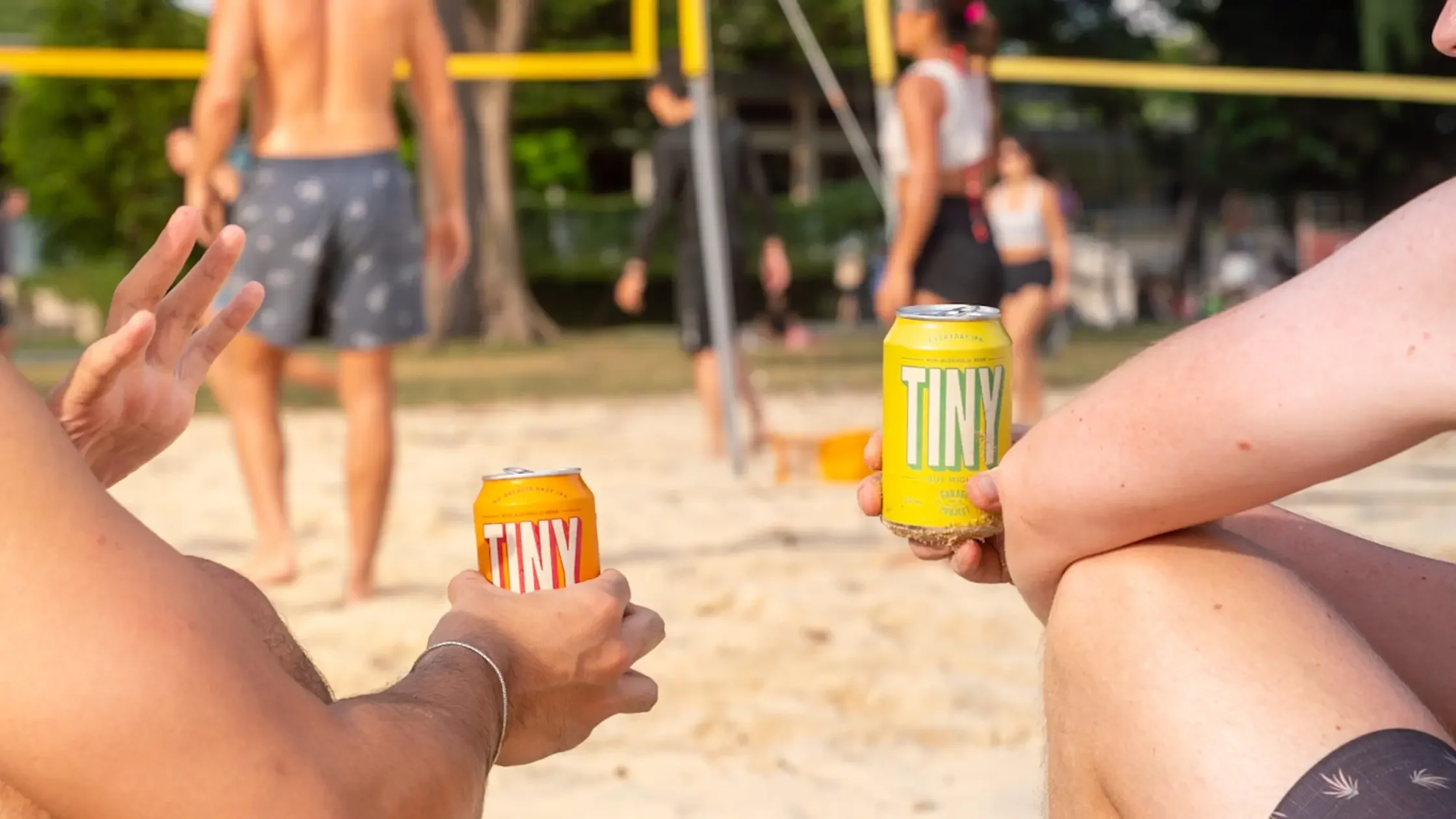
When a well-made NA beer tastes like a proper craft beer, has the same ritual of cracking a cold can, and fits the same social moments — the only thing that's different is how you feel tomorrow morning. Which, in a city running at Singapore's pace, turns out to matter quite a bit.
We built TINY for exactly that person. Not the person who doesn't drink. The person who drinks thoughtfully — and wants something worth drinking when they choose to dial the ABV down.
The mindful drinking movement offers more than just a defensive strategy for brands willing to adapt. It's a space to grow with a new generation of drinkers who value control, authenticity, and wellness just as much as they value flavour and fun.
Singapore's high-performance culture didn't create mindful drinking. But it's one of the best environments in the world for it to take root.
Bright and hoppy days ahead.