
Pairing Espresso Beans with Chocolate Notes: A Guide for Beer Lovers
By Jimmy C.
There is a conversation in craft beer circles that does not get enough airtime outside of the most serious tasting rooms.
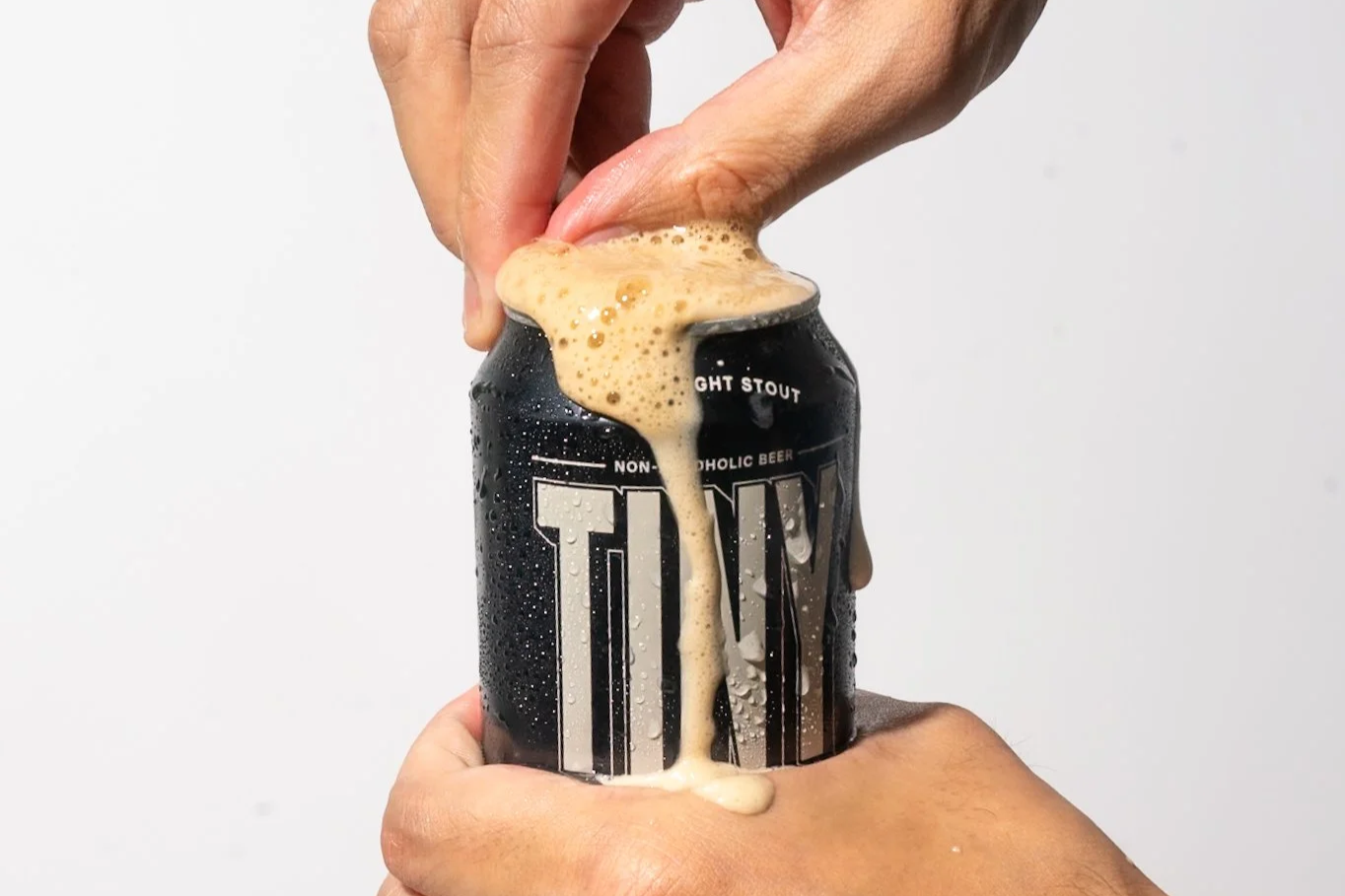
It is about why a well-made stout and a shot of good espresso taste so similar to each other, and what that shared chemistry means for how you pair, drink, and think about dark beer. It is also a conversation that becomes surprisingly relevant the moment you crack open a TINY Day and Night Stout, because the coffee and dark chocolate notes in that can are not flavourings added to mimic something else. They are the natural result of a roasting process that coffee beans and dark malt have in common.
Understanding why those flavours exist makes you a better drinker. And it makes the pairing possibilities a lot more interesting.
Why Stout Tastes Like Coffee and Chocolate
The answer is the Maillard reaction.
Named after the French chemist Louis-Camille Maillard who first described it in 1912, the Maillard reaction is a chemical process that occurs when amino acids and reducing sugars are exposed to heat. It is responsible for the browning and flavour development in cooked foods: the crust on fresh bread, the sear on a piece of meat, the colour and aroma of roasted coffee beans. It is also what happens to barley malt when a brewer roasts it to produce the dark, speciality malts used in stouts.
As the WSET notes in their analysis of stout flavour chemistry: chocolate malt, named for its deep brown colour, delivers rich cocoa notes, but can also introduce coffee and toasted aromas depending on how it is used. Black malt, roasted even darker, contributes bolder coffee and burnt toast notes alongside hints of dark chocolate. The longer and hotter the roasting process, the more intense these reactions become, moving the flavour profile from toasty notes to chocolate and finally to pure espresso and bitter char.
This is why drinking a well-made stout and drinking a well-pulled espresso are experiences that share so much common ground. They are both the products of the Maillard reaction pushing heat, time, and organic material into the same chemical territory. The flavour compounds that create dark chocolate and espresso character in roasted coffee beans are the same compounds created when a brewer roasts dark malt. Same chemistry, different ingredients.
That is not an analogy. It is actual biochemistry.
What TINY Day and Night Stout Actually Delivers
TINY Day and Night Stout is brewed by Garage Project to capture the full roasty character of a traditional stout at under 0.5% ABV and 72 calories per 330ml can.
The confirmed tasting profile from Garage Project is smooth malt flavours with notes of coffee and dark chocolate and a satisfyingly full-bodied finish. That profile is not achieved by adding coffee or chocolate flavourings to a base beer. It is achieved by using dark roasted malts in the grain bill, allowing the Maillard chemistry described above to do its work during the malting process, and then using Garage Project's arrested fermentation techniques to preserve that roast character in the finished beer without stripping it out through dealcoholisation.
This is where the craft NA approach matters specifically for a stout. The roasted compounds that give a stout its coffee and chocolate character are volatile. They are the same class of aromatic compounds that get destroyed in heat-based dealcoholisation processes. A stout made by brewing full-strength and then heating the alcohol off loses a significant proportion of the roast character that made it worth drinking in the first place.
By limiting alcohol production through fermentation control from the start, Garage Project preserves those roasted aromatics intact. The coffee notes survive. The dark chocolate depth survives. The full-bodied finish survives. At 72 calories, what you are drinking is a stout that tastes like a stout, not a stout-adjacent experience with the interesting parts removed.
The Pairing Logic
Understanding the shared chemistry between dark malt and roasted coffee opens up a more systematic way to think about what goes well alongside a TINY Day and Night Stout.
The core pairing principle for any stout is straightforward: the roasted, slightly bitter, dark character of the beer either echoes similar flavours in the food, cuts through richness and fat, or provides a contrasting sweetness to balance salt and sour. Work with those three directions and the pairings fall into place naturally.
Dark chocolate is the most obvious and most reliably successful pairing. The roasted barley malt compounds in the stout and the roasted cacao compounds in dark chocolate share the same Maillard reaction origin, which means they harmonise rather than compete. A 70% or higher dark chocolate with a TINY Day and Night Stout is not a complicated pairing decision. It is two expressions of the same roasting chemistry sitting next to each other and reinforcing what each one does best. The bitterness of the chocolate and the bitterness of the malt balance each other, and the sweetness of neither is enough to overwhelm.
Espresso and coffee bring an interesting dimension because you are now pairing two things that are not just flavour-similar but are literally from the same chemical family. A sip of TINY Day and Night Stout followed by a sip of a well-pulled single-origin espresso is a study in how the same Maillard compounds express differently depending on their source material. The roast notes in the beer are smoother, the roast notes in the espresso sharper. Together they create a layered experience that is more interesting than either one alone. For those who work in or around Singapore's serious coffee culture, this is a pairing worth trying intentionally rather than accidentally.
Smoked and grilled meats work for a different reason. The char on a piece of grilled protein, whether it is a brined piece of pork, a charred satay stick, or a piece of grilled brisket, shares the browning chemistry of Maillard with the dark malt in the stout. The beer echoes the char rather than fighting it. The result is a combination where each element makes the other taste more itself.
Cheese, particularly aged varieties with some sharpness, provides contrast. The salt and fat in a good aged cheddar or a manchego cuts through the roast bitterness of the stout, while the stout's body stands up to the richness of the cheese without being overwhelmed. It is a pairing that rewards going slightly further into quality than you might with a lighter beer.
The Singapore Coffee Culture Angle
This particular pairing conversation has a specific resonance in Singapore that is worth naming.
Singapore's coffee culture runs deep in two directions simultaneously. On one side, the traditional kopi culture of hawker centres and kopitiams: robusta-forward, often brewed with butter-roasted beans, served with condensed milk, intensely dark and sweet. On the other side, a serious and growing specialty coffee scene that ranks among the most sophisticated in Southeast Asia, with roasters, pour-over specialists, and cafes that could hold their own in any major city in the world.
Both traditions produce coffee with significant dark roast character. And both have a natural conversation with a well-made dark beer that shares that roast profile.
The kopi pairing is a contrast exercise: the sweetness and condensed milk weight of a traditional kopi sitting alongside the dry roast bitterness of a stout produces a balance that neither achieves alone. The specialty coffee pairing is a harmony exercise: a clean, well-pulled Ethiopian or Colombian single-origin alongside a stout that shares its chocolate and coffee-forward notes produces a layered tasting experience that is specifically interesting to anyone who thinks carefully about flavour.
At 72 calories and under 0.5% ABV, TINY Day and Night Stout is also the version of this pairing that works at any time of day. You are not committing to a full-strength stout in the middle of the afternoon before a working evening. You are having a dark, complex, genuinely interesting beer alongside something equally complex, at a moment of your choosing, without the ABV making that a complicated decision.
Serving Notes
Serve TINY Day and Night Stout slightly warmer than the other TINY variants. The recommendation from Craftzero for the style is around six to ten degrees celsius. Unlike the hop-forward beers in the range where cold temperature preserves aroma, the roasted compounds in a stout open up and become more expressive as the temperature rises slightly from fridge-cold. Give it five minutes out of the fridge before drinking and the coffee and chocolate notes will be noticeably more present.
A tulip glass or any glass with a slight curve at the top concentrates the aroma more effectively than a straight pint glass. The visual appeal of the dark pour and the creamy head is also worth appreciating in the glass rather than the can, though the can works fine when convenience is the point.
If you are pairing with actual espresso: pull the shot first, let it cool for ninety seconds, then sip alternately. Hot espresso alongside a cold beer creates a temperature conflict that works against both. A little patience produces a noticeably better result.
The Honest Assessment
The stout is the range variant that surprises people most.
The hop-forward beers, the Hazy IPA, the XPA, the IPA, have an obvious route to success: preserve the hop aromatics and the mouthfeel and the style delivers. A stout is harder. The roasted complexity that defines the style is more fragile in the NA context, and most NA stouts fail by producing something thin and vaguely dark rather than genuinely roasty and full-bodied.
TINY Day and Night Stout avoids that failure because of how it is brewed. The arrested fermentation approach that keeps the volatile roast compounds intact is doing more visible work here than in any other variant in the range, because there is less else to hide behind. If the roast character is not there, the beer does not work. And the roast character is there.
Coffee notes. Dark chocolate depth. Smooth malt backbone. Full-bodied finish. At 72 calories and under 0.5% ABV. That is proof that complexity does not require high ABV. It requires good brewing.
Bright and hoppy days ahead.