
By Jimmy C.
There is probably no celebration more closely associated with beer than Oktoberfest. Long communal tables, steins in the air, brass bands, pretzels, and, traditionally, plenty of lager.
But something interesting is happening. More people want to be part of the celebration without necessarily wanting all the alcohol that traditionally comes with it.
Oktoberfest is adapting. Munich's official festival now serves non-alcoholic beer across its beer tents, while Oktoberfest celebrations elsewhere are expanding their menus with non-alcoholic beer, mocktails and other low- and no-alcohol choices.
The festival isn't becoming less about beer. Beer itself is becoming more flexible.
OKTOBERFEST WAS NEVER JUST ABOUT THE ALCOHOL
It's easy to reduce Oktoberfest to enormous glasses of beer, but the celebration has always been bigger than what's inside the stein. The original Oktoberfest in 1810 wasn't even created as a beer festival — it began as a public celebration of the marriage of Crown Prince Ludwig of Bavaria and Princess Therese.
More than two centuries later, beer is obviously central to the occasion. But so are the food, music, communal tables, traditional clothing and simple experience of celebrating alongside thousands of other people.
That's why introducing more non-alcoholic choices doesn't necessarily take anything away from Oktoberfest. People aren't asking to remove the beer or the ritual.
They're asking for more ways to participate in it.
THE NON-ALCOHOLIC STEIN IS BECOMING NORMAL
A few years ago, attending Oktoberfest and asking for a non-alcoholic beer might have seemed contradictory. Today, considerably less so.
Munich's official Oktoberfest says non-alcoholic beer is available across all beer tents. Beyond Munich, breweries and hospitality operators are also developing more NA options around Oktoberfest, from non-alcoholic festival-style beers to expanded mocktail and low-ABV menus.
That's an important change: non alcoholic beverage is no longer being treated simply as the backup option for someone who can't or doesn't want to drink. You can still order the beer, raise the glass, join the toast and stay at the table. The ABV simply doesn't have to match everyone else's.
PEOPLE AREN'T STOPPING. THEY'RE DRINKING DIFFERENTLY.
The rise of NA options at Oktoberfest fits into a much wider change in drinking culture. People aren't necessarily choosing between drinking alcohol and giving it up completely.
Someone might want the traditional full-strength beer first, then an NA beer for the next round. Someone else might choose to be non-alcoholic all evening. Others simply want to moderate because tomorrow morning still exists.
That flexibility makes traditionally alcohol-heavy occasions more accessible without fundamentally changing them. The celebration stays, but the amount of alcohol becomes a choice.
THE PRODUCT FINALLY MATCHES THE PROMISE
None of this works particularly well if the NA option feels like the disappointing version of what everyone else is drinking. Fortunately, non alcoholic beer has changed significantly. The category now extends far beyond generic lager, with brewers producing IPAs, hazies, pale ales, stouts and even Oktoberfest-inspired styles.
That means people can still think about malt, hops, bitterness, body and flavour when choosing what to drink. Alcohol content becomes one part of the decision rather than the entire reason the product exists.
And for an occasion built around an appreciation of beer, that's a pretty important development.
YOU DON'T HAVE TO PICK A SIDE
Oktoberfest also happens to be an ideal occasion for another emerging drinking behaviour: zebra striping. Instead of making the entire day alcoholic or non-alcoholic, drinkers alternate between the two. Have a traditional festival beer, choose an NA option for the next round, then decide again later.
For celebrations that can last several hours, the approach makes sense. You can enjoy a full-strength beer without assuming every drink that follows needs the same ABV.
It's another sign that moderation is becoming less binary. Sometimes people aren't choosing alcohol or non-alcoholic drinks. They're choosing both, based on the moment.
WHERE TINY FITS INTO THE CELEBRATION
TINY isn't trying to recreate a traditional Bavarian Festbier. But what Oktoberfest's evolution shows is that people increasingly want beer occasions without rigid rules about alcohol.
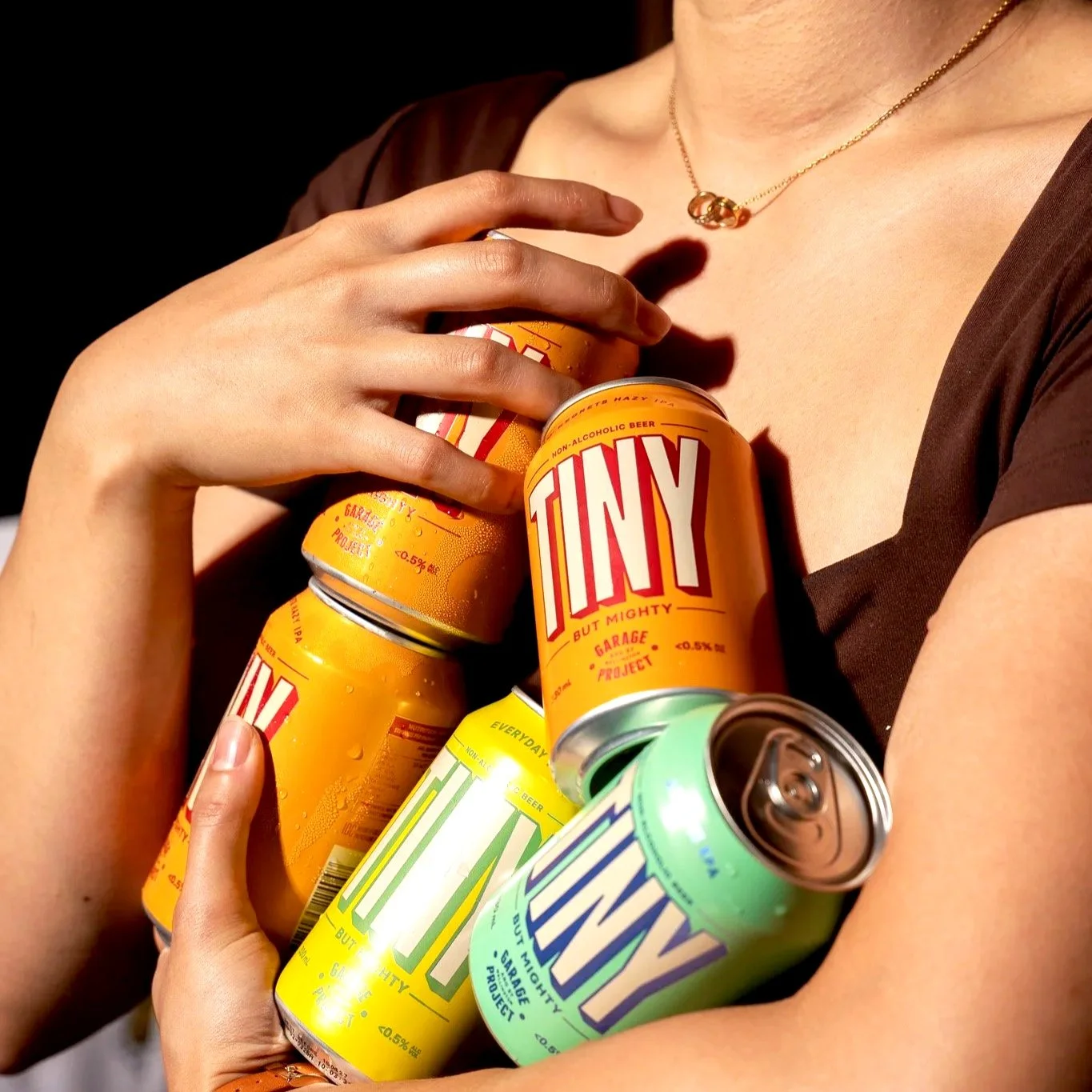
That's where TINY fits. Brewed by Garage Project in Wellington, TINY offers recognisable craft beer styles at <0.5% ABV, including Hazy IPA, Everyday IPA, Anytime XPA, Lager with Lime and Day & Night Stout.
For an Oktoberfest celebration in Singapore, that means another option at the table. Have a TINY between traditional beers. Choose one for the entire evening. Or simply pick it because that's the beer that suits the moment.
This isn't about replacing long-standing traditions—it's about making participation more flexible.
THE BEST TRADITIONS KNOW HOW TO EVOLVE
There's something interesting about one of the world's most famous beer celebrations becoming an example of how modern drinking culture is changing. But perhaps that's exactly why Oktoberfest has lasted. Traditions survive because people continue to find meaning in them — not because every detail stays frozen forever.
The growing presence of non alcoholic beer doesn't make Oktoberfest less about beer. It simply gives more people a way to enjoy the food, music, shared tables, beer and all-important Prost.
Because maybe the future of NA beer isn't about creating separate occasions for people who drink differently. It's about making the occasions we already love big enough for everyone.
Drink TINY, celebrate mighty!