
TINY XPA and the Rise of the "Anytime Beer
By Jimmy C.
There is a particular kind of beer that does not get enough credit in craft circles.
Not the big, bold, barrel-aged statement beer. Not the double IPA that demands your full attention. Not the experimental sour that polarises every table it lands on.
The anytime beer. The one that is always good, never tiring, and fits almost any moment you care to put it in. Sessionable enough for a long afternoon but flavourful enough to hold your interest. The beer equivalent of a great playlist that works for cooking, commuting, and having friends over without anyone noticing a transition.
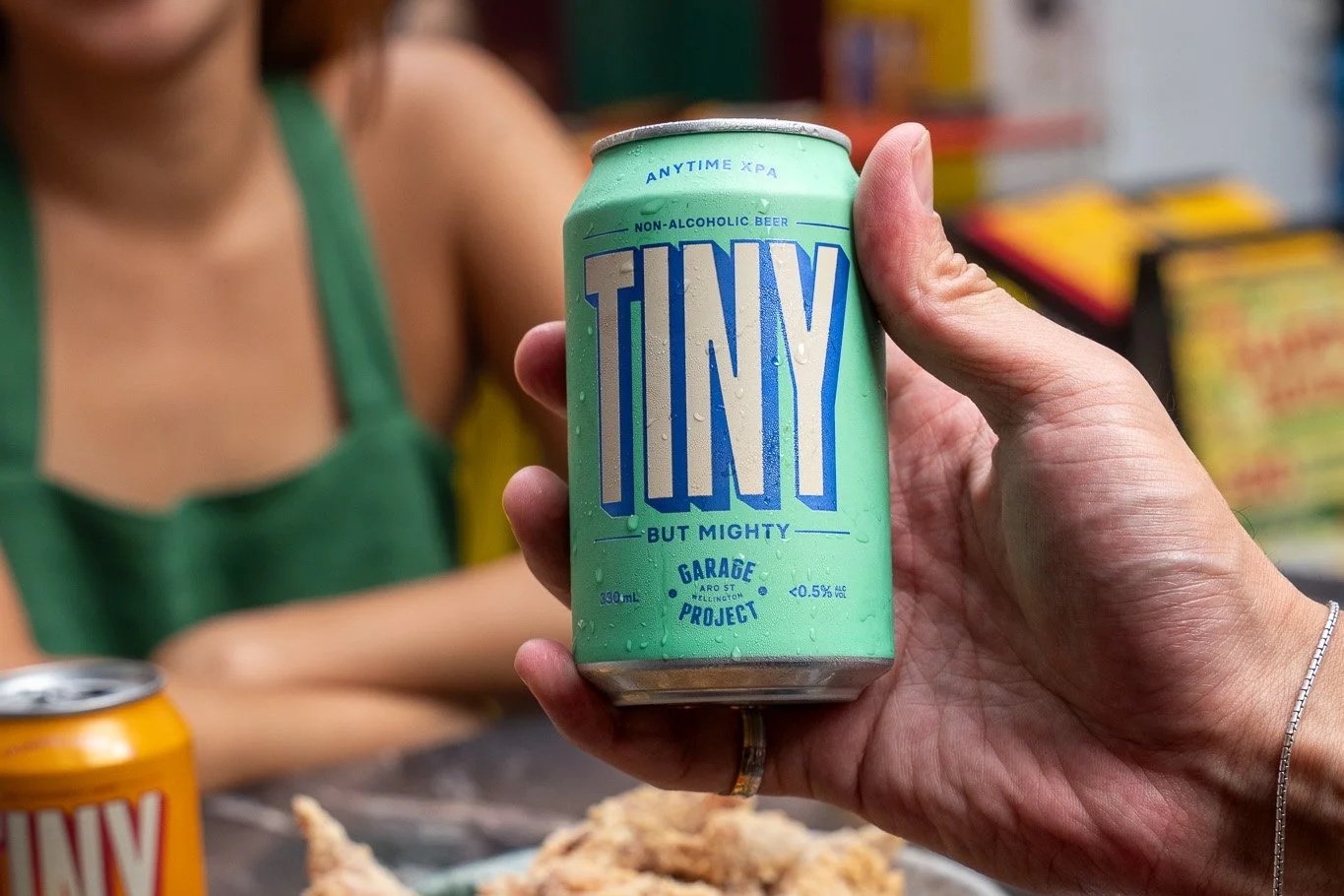
The XPA as a style was built for exactly this purpose. And TINY XPA is one of the better arguments for why non-alcoholic beer belongs in that conversation.
What Is an XPA, Exactly?
Extra Pale Ale. The name sounds like marketing shorthand, and honestly it sort of is, but the style itself is a genuine and useful point on the craft beer spectrum.
The XPA sits between a traditional pale ale and a full IPA. It is lighter in body and colour than a pale ale, less intensely bitter than a West Coast IPA, and less aromatic than a Hazy IPA. What it prioritises is balance and drinkability, with enough hop character to be interesting and enough restraint to be genuinely refreshing rather than challenging.
In practical terms, an XPA is the beer you reach for when you want something with real craft character but without the commitment that a bigger style asks of you. It is the style that works at a barbecue and a work lunch, after a run and before a meeting. The XPA's defining quality is its versatility, which is another way of saying it was designed to be the anytime beer.
That design philosophy aligns almost perfectly with what a well-made NA beer is trying to achieve. Which is why TINY XPA makes a lot of sense as a style choice.
What Is in the Can?
TINY XPA is brewed with pilsner malt and a trio of Simcoe, Strata, and Citra hops. If you read the Hazy IPA post, you will recognise Simcoe and Strata from that lineup. Citra replaces Mosaic here, which is a meaningful swap that shifts the flavour profile noticeably.
Citra is one of the most popular aroma hops in the world, and for good reason. Developed by the Hop Breeding Company and released in 2008, it overtook Cascade as the most widely grown hop variety in the US in 2018 and has not relinquished that position since. The reason is straightforward: Citra delivers an unusually clean, bright citrus and tropical profile without the dank earthiness that some other high-impact hops carry. Grapefruit, lime, orange, and lemon on the citrus side. Mango, passionfruit, and lychee on the tropical side. Underneath that, a subtle freshness that keeps the aroma feeling alive rather than heavy.
Paired with Simcoe, which provides the structural bitterness and apricot and berry fruit notes, and Strata, which adds depth and a subtle resinous quality without muddying the clarity of the profile, Citra produces something noticeably different from the Hazy IPA. Where the Hazy leans into tropical abundance and soft mouthfeel, the XPA is bright, clean, and precise. The lemon sherbet note that Garage Project highlights on the label is real and immediate on pour. Citrus-forward, pineapple in the background, a pine hop character that grounds it, and a clean, crisp finish that makes you want another one.
That is what 59 calories and under 0.5% ABV delivers here. Not a watered-down version of the style. The actual style.
Why Pilsner Malt Works So Well Here
It is worth spending a moment on the grain choice, because it is doing important work in TINY XPA.
Pilsner malt is the lightest, cleanest base malt available in brewing. It provides fermentable sugars without contributing much colour, sweetness, or heavy malt character. In a big, complex beer, you might layer it under crystal malts or specialty grains to add depth and colour. In an XPA, you want it clean and light so the hops can do the talking unobstructed.
In the context of a non-alcoholic beer, this matters more than it might appear. Because TINY XPA is not trying to hide behind richness or complexity. It is relying entirely on hop character and fermentation quality to deliver the experience. The pilsner malt keeps the body light enough that the Citra, Simcoe, and Strata aromatics come through clearly, without any malt heaviness sitting in front of them.
The result is a beer that pours a bright golden hue, clear rather than hazy, and carries a lifted aroma that you notice before you even get the can to your lips. That clarity, both visual and aromatic, is what the XPA style is about and what pilsner malt makes possible.
The Anytime Case
Let me make the practical argument, because I think it is the most important one.
If you are building a fridge that reflects how modern drinking culture actually works, you probably want a range. Something for the occasions when you want a big, characterful beer and are giving it your full attention. And something for the occasions when you just want something cold, well-made, and refreshing without thinking too hard about it.
The TINY Hazy IPA sits in the first category. It is genuinely excellent and it rewards attention, but it is also a flavour-forward beer that announces itself. You notice it.
The TINY XPA sits in the second category. It is the beer that works for the Tuesday evening after a long day, the Saturday afternoon at a barbecue, the post-gym drink that fits the training block you are in, and the mid-week work lunch where you want something with craft character but do not want to commit to anything that takes concentration. It is not a lesser beer. It is a different job.
Garage Project's own label says it plainly: brewed for big enjoyment, anytime. That is not a tagline. It is a brief.
Food Pairing: What Actually Works
The XPA's clean, citrus-forward profile makes it one of the more food-friendly styles in the craft NA range, which is worth knowing if you are thinking about it for events or restaurant menus.
The bright citrus from Citra works particularly well with seafood. Grilled fish, prawn dishes, anything with a squeeze of lemon is going to harmonise rather than compete. The light body does not overwhelm delicate proteins the way a heavier beer might.
Spicy Asian dishes are another strong match. The clean carbonation and citrus brightness cut through chilli heat effectively, and the tropical fruit notes in the hop profile complement the aromatics in Thai, Vietnamese, and Singaporean cuisine specifically. For a Singapore-based brand, that food pairing compatibility is worth highlighting.
Light salads, soft cheeses, and salty snacks all work for the same reason: the XPA is refreshing enough to cleanse the palate between bites without dominating what is on the plate.
Serve it between three and six degrees celsius. Cold enough to be properly refreshing, not so cold that the hop aroma closes up before it reaches you.
The Honest Assessment
The XPA is not the beer that is going to make someone rethink everything they thought about craft NA beer. That job belongs to something more dramatic, the Hazy IPA or the Stout, the beers that stop you mid-sip.
What the XPA does is prove that non-alcoholic craft beer can be genuinely good without needing to announce itself. That it can sit in a fridge alongside full-strength options and get chosen not because someone is making a health choice or being careful, but because it is cold, bright, clean, and exactly what the moment calls for.
That is the anytime beer. And it is harder to make than it sounds.
A beer that is always good requires a level of consistency and balance that flashier styles can hide from. There is nowhere to distract attention when the brief is simply to be refreshing and well-made. TINY XPA clears that bar.
At 59 calories and under 0.5% ABV, it also happens to be the beer you can have whenever you want without doing any calculations about it. Which, in a week where most people are running multiple competing priorities, turns out to be a genuinely useful thing.
Bright and hoppy days ahead!