
HOW NA BEER BECAME COOL WITHOUT TRYING TOO HARD
By Jimmy C.
What changed between the thin, flat consolation prize of five years ago and the craft NA beer people actually choose today isn't marketing hype: it's brewing science, consumer priorities, and a cultural shift that nobody had to force.
The Old Reputation Wasn't Wrong, It Was Just Outdated
Not long ago, ordering a non-alcoholic beer felt like a compromise. You'd get something thin, vaguely beer-flavoured, and slightly flat: more of a consolation prize than a grand prize. That reputation wasn't wrong, it was based on how NA beer was previously made.
For most of NA beer's history, the process was simple in theory and flawed in practice. Brew a regular beer, then take the alcohol out. The two most common methods were heat evaporation — essentially boiling the alcohol off — and reverse osmosis, which forces the beer through a membrane to filter it out. Both technically work, and both have a significant problem.
Here's the thing about alcohol that most people don't realize: ethanol contributes to the strong smell and taste of beer, and research has shown that removing it results in beer that loses fruitiness, sweetness, fullness, and body. Thermal processes entail strong alteration of the aroma, and even reverse osmosis results in significant losses in volatile compounds. In other words, when you strip the alcohol, you strip a lot of what made the beer enjoyable.
That's why NA beer had such a bad reputation: thin, flat, and vaguely beer-flavoured. The old approach was basically subtraction, and the result tasted like something was missing.
Brewing for Flavour Instead of Fixing What Got Stripped Away
Nothing is the same as before. Instead of brewing a full-strength beer and then stripping it down, craft brewers started asking a different question: what if you brewed specifically for flavour at low or no alcohol from the start? - this is the question that shifted the NA category dramatically. The new approach isn't about fixing what got taken away, it’s about building something worth drinking in the first place.
This approach typically involves arrested fermentation — stopping the process before it reaches its normal, alcohol-producing conclusion — essentially hitting pause before too much ethanol develops. According to research published in the Journal of the Institute of Brewing, brewers achieve this by using specialized yeast strains that don't ferment as aggressively, and by carefully controlling fermentation temperature, typically by ensuring the wort does not exceed 60°F (15°C). Companies like Escarpment Labs have developed yeast strains specifically for this purpose.
The result is beer brewed for flavour from the start, rather than beer that's had something important taken away. The hops, the aroma, the mouthfeel — all of it is preserved because nothing essential was removed in the first place. No heat stripping. No reverse osmosis. No hollow aftertaste.
The Data Caught Up to What People Were Already Doing
The science tells a clear story about the trade-off between alcohol and sleep quality, cognitive function, and next-day performance. But the data is starting to catch up to what a lot of people are already experiencing on the ground.
According to a Beer Institute survey, 61% of Gen Z and Millennial consumers say they'd choose an NA version of their favourite beer. The Asia Pacific non-alcoholic beer market's low-alcohol segment is projected to grow at a CAGR of 12.3%, which IWSR projects will continue at 8% annual growth through 2029. That's not a niche. That's a market responding to genuine demand.
Here's what the numbers actually show: 75% of Gen Z consumers reported moderating their alcohol intake in the past six months but so did 74% of Millennials and 66% of Gen X. The numbers show a cross-demographic recalibration of when, how much, and why people drink.
Nobody was questioning it particularly. But quietly, a lot of people started making different calculations. Someone might still order a craft beer at a Friday night dinner. But make a different call at a Wednesday networking event. That's not a restriction. That's just people getting smarter about what they're optimizing for.
Performance Culture Made Room for Strategic Drinking
People in high-achieving city environments face an unspoken tension: social and professional schedules constantly overlap, with alcohol serving as the uncomfortable bridge between them.
Anyone who has lived and worked in a high-intensity city understands a familiar, unspoken conflict. The demands of our social lives and professional responsibilities collide, with alcohol sitting uncomfortably at the intersection. Take Singapore, where official data sets the average workweek at 43.3 paid hours. In reality, that metric fails to capture the true burden on an employee’s schedule, completely omitting the "quasi-mandatory" commitments—the client dinners, industry events, and networking drinks—required to survive. This isn't a critique of the culture; it is simply the reality of thriving in a hyper-competitive economy. In an environment where showing up sharp every single morning is a strict professional requirement, the calculus of how we drink has to change.
What makes the shift interesting is that it's not driven by abstinence culture or wellness trends. It's driven by people who like beer, who value the social function alcohol serves, and who simply want more control over the trade-off. It's not abstinence. It's context-awareness. And that's the gap that craft NA beer is starting to fill: not as a sacrifice, but as a genuine option worth choosing.
What Makes the New Wave Actually Worth Choosing?
Fair question. And until pretty recently, the honest answer was: not really. But what separates the new wave of craft NA beer from what came before isn't marketing. It's a process.
The brewers making genuinely good non-alcoholic beer today are using arrested fermentation methods that preserve the volatile compounds responsible for aroma and flavour. They're selecting hop varieties specifically for their ability to deliver aroma without relying on alcohol as a carrier. They're controlling fermentation temperatures with precision to build body and mouthfeel from the ground up.
The upgraded process results in a beer that doesn't taste like something's missing; the hop profile is punchy and layered without the cloying sweetness that often compensates for lack of structure in lower-quality NA beers. The body has weight, the finish has bitterness, and the whole experience feels deliberate, not compromised.
People are Choosing TINY
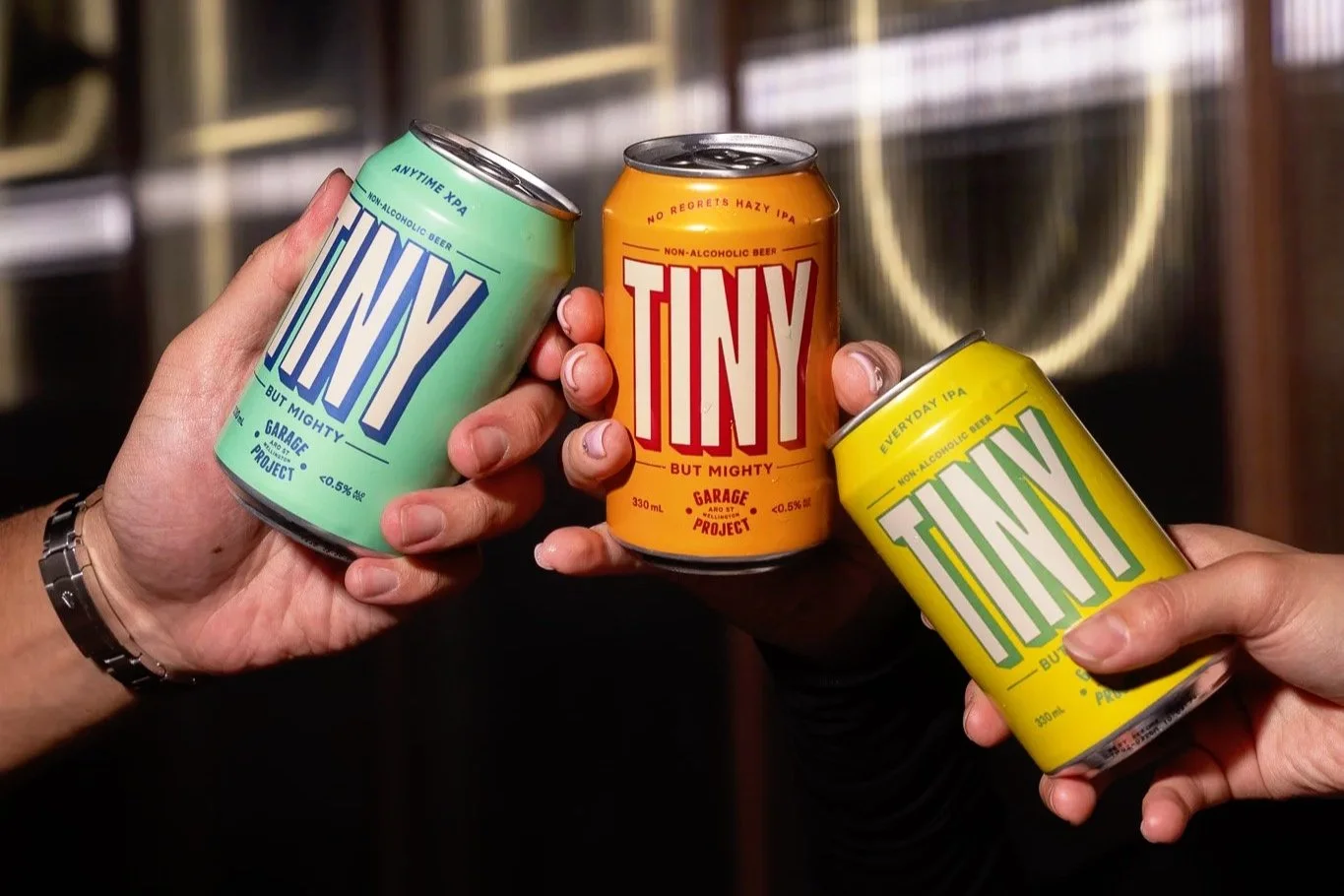
People are incredibly enthusiastic about TINY beer, making it one of the most successful breakout hits in the non-alcoholic craft beer market. Reviewers on platforms like Untappd and specialty craft sites consistently praise it for defying the 'watery or flavorless' stereotype that still clings to older NA beers. Reviewers frequently note that if they were served TINY blind, they would completely believe it was a standard, high-quality craft beer. That's not hyperbole. That's legitimate craft flavour.
The Hazy IPA and Everyday IPA variants are highly praised for retaining massive, 'punchy' tropical and citrus notes without the heavy sweetness common in other non-alcoholic brands. A major complaint about many NA beers is that they feel thin. Reviewers note that TINY manages a surprising amount of mouthfeel and a proper, satisfying bitter finish. The body has weight. The finish doesn't disappear.
The TINY Stout is a massive crowd favourite, with drinkers calling it 'shockingly good' for a non-alcoholic dark beer, capturing authentic coffee, dark chocolate, and roasted malt notes without the alcohol. It's proof that arrested fermentation methods work across styles, not just hoppy beers.
So the real question isn't whether you should be drinking non-alcoholic beer. It's whether the one you're drinking is actually worth it. If you've tried NA beer before and been underwhelmed, it's probably worth trying again. What you remember isn't what's being made today.
Drink TINY, celebrate mighty!