
Decoding the Non-Alcoholic Beer Label: Understanding <0.5% ABV
By Jimmy C.
There's a small symbol on every can of non-alcoholic beer that makes some people put it straight back on the shelf: < 0.5% ABV.
The question it raises is obvious: if this is supposed to be non-alcoholic, why isn't it 0.0%? Is there something being hidden in plain sight? Is 0.5% actually meaningful? Should anyone be worried about it?
Short answer: no. But the longer answer is actually more interesting than a simple reassurance — because understanding what that number means tells you a lot about how good NA beer is made, and why the trace amount isn't a flaw. In many cases, it's the point.
What < 0.5% Actually Means
The < symbol means the alcohol content is below 0.5% by volume. In a standard 330ml can, that works out to roughly 1.3 grams of alcohol — less than what you'd find in a ripe banana (up to 0.4% ABV), and considerably less than a burger bun or sourdough bread, which can reach 1.28% ABV through the natural yeast fermentation in the dough. Kombucha, widely consumed and actively marketed to health-conscious people, regularly sits between 0.5% and 2% ABV depending on how long it's been fermenting.
Trace alcohol shows up in far more everyday foods than most people realise. The 0.5% threshold for non-alcoholic beer isn't a loophole — it's a science-backed regulatory standard, applied consistently across the EU, the UK, Australia, and most international markets, based on a clear-eyed understanding of how the body actually processes alcohol at these concentrations.
A healthy adult liver metabolises roughly 10 grams of alcohol per hour. At 0.5% ABV, you would need to consume more than 40 standard 330ml cans within a single hour to approach the legal driving limit. A 2012 study published in the Journal of Analytical Toxicology found no measurable increase in blood alcohol content in subjects consuming 0.5% ABV beverages in a controlled setting, even across multiple servings.
The number isn't a warning. It's a marker of how the beer was brewed.
Why 0.0% Is Harder Than It Sounds
Here's something the label doesn't tell you: chasing 0.0% ABV often makes the beer worse.
Ethanol isn't just a byproduct sitting inertly in the liquid. It actively contributes to aroma, mouthfeel, and the overall structure of beer. Research published in Scientific Reports found that removing alcohol from lager resulted in a product perceived as maltier, with reduced fruitiness, sweetness, fullness, and body. Separate studies have documented that thermal dealcoholisation causes strong alteration of volatile aroma compounds — the molecules responsible for hoppy aromatics, fruity esters, and the complexity that makes a craft beer interesting.
Stripping out every molecule of alcohol to hit 0.0% typically requires aggressive processing — more heat, more filtration, more passes through a membrane. Each one strips a little more character from the beer. The product that comes out the other side is technically accurate and experientially hollow.
The trace amount that remains at < 0.5% isn't left in by accident or negligence. It's left in because it helps preserve the mouthfeel, the aroma structure, and the body that make the beer worth drinking.
The Method That Changed Everything
The more interesting question isn't why NA beer contains trace alcohol. It's why the better NA beers contain it at a specific level — and what that tells you about how they were made.
The old approach was subtraction: brew a full-strength beer, then remove the alcohol. Both heat evaporation and reverse osmosis damage the beer in the process, stripping out volatile aromatics along with the ethanol.
The craft approach is different. Arrested fermentation controls the process from the start — managing temperature carefully, typically keeping the wort below 15°C (60°F), so that significant alcohol never builds up in the first place. The hops, the aroma, the body — preserved because the brewing process was designed around keeping them.
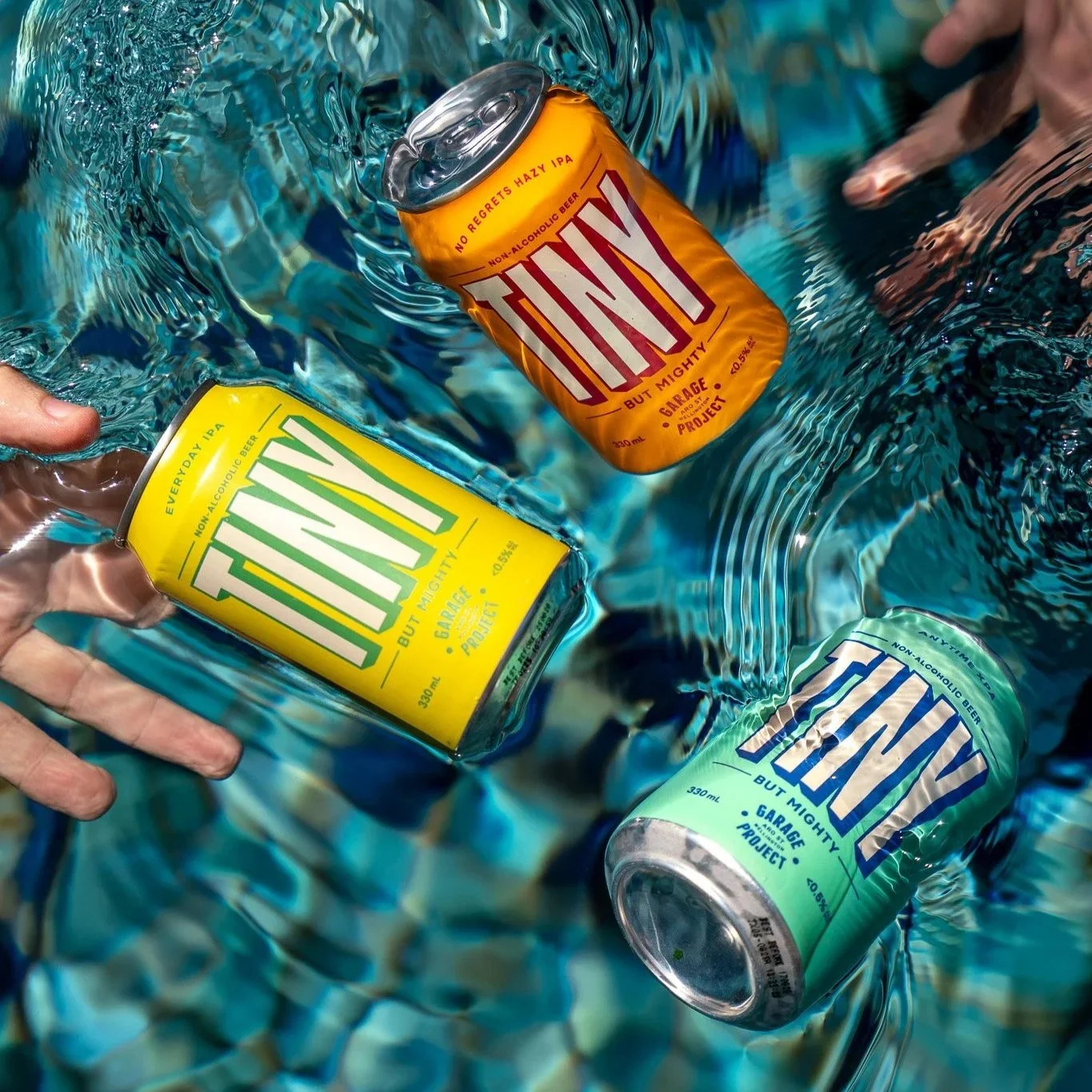
Garage Project, who brew TINY, use specialised, often proprietary fermentation techniques — including methods akin to arrested fermentation — to achieve exactly this. The label reads < 0.5% ABV because that's what careful, deliberate craft fermentation produces. Not because anything was left in that should have been taken out.
A Note on 'Non-Alcoholic' vs 'Alcohol-Free'
Worth knowing, since it comes up: these two terms aren't interchangeable, legally or practically.
In most international markets, non-alcoholic covers beverages below 0.5% ABV. Alcohol-free is a stricter designation, typically reserved for 0.0% products — and achieving a verified 0.0% requires additional processing and regulatory approval. In the UK, de-alcoholised specifically describes beers that started at full strength and were then processed down.
TINY sits in the non-alcoholic category — under 0.5% ABV, brewed through controlled fermentation rather than dealcoholisation. The label is accurate, the process is deliberate, and the number reflects a choice to prioritise flavour over a technically purer but experientially inferior 0.0%.
So Should the Number Concern You?
For most people, no. The 0.5% threshold is a globally recognised regulatory standard grounded in physiology, not a grey area.
There are specific contexts — recovery, religious observance, certain medical situations — where even trace amounts matter, and that's a legitimate and personal consideration. For those situations, a 0.0% product is worth seeking out specifically.
But for the vast majority of people who pick up a TINY and pause at the label: what you're looking at is the mark of a beer that was brewed properly. The < 0.5% isn't what's in spite of the craft. In many ways, it's because of it.
Bright and hoppy days ahead.