
By Jimmy C.
Beer percentages are easy to overlook.
You see 4%, 5%, maybe 6% printed somewhere on a bottle or can, and unless you're deliberately checking, those numbers tend to blur into the background. A lager is a lager. An IPA is an IPA. You know there's alcohol in there — but how much are you actually drinking?
The answer is slightly more complicated than it looks.
Regular beer alcohol content typically sits somewhere around 4–6% alcohol by volume (ABV), but the number can vary considerably depending on the style, brewing process, and serving size. A light lager and a double IPA might both be called beer, but what they deliver in terms of alcohol can be very different.
Understanding that difference makes it easier to know what's actually in your glass — and why increasingly, beer drinkers are paying attention.
FIRST, WHAT DOES ABV ACTUALLY MEAN?
ABV stands for alcohol by volume. Put simply, it tells you what percentage of the liquid in your drink is pure alcohol.
A beer labelled 5% ABV contains approximately 5% alcohol by volume. A beer at 8% ABV contains considerably more. Something sitting below 0.5% ABV is at the opposite end of the spectrum.
Straightforward enough. Where it becomes more useful is when you stop treating every beer as roughly equivalent. Two beers can look almost identical in the glass while having very different alcohol content. The style matters. The strength matters. And importantly, the amount you're drinking matters too.
SO, HOW MUCH ALCOHOL IS IN REGULAR BEER?
For most mainstream beers, regular beer alcohol content tends to fall within the 4–6% ABV range. Many familiar lagers sit around 4–5%. Pale ales and IPAs often move higher, while stronger craft styles can climb well beyond that.
As a general guide:
Light beer: around 3–4% ABV
Standard lager: around 4–5% ABV
Pale ale: around 4.5–6% ABV
IPA: commonly around 5–7.5% ABV
Double or Imperial IPA: often 7.5–10% ABV or higher
Stout and porter: roughly 4–8% ABV, although stronger versions can go considerably higher
These aren't hard rules. Brewing is far too varied for that. But they demonstrate an important point: "a beer" isn't really a standard measure of alcohol unless you also know its ABV and serving size. That 4% lager and 8% double IPA might arrive in similarly sized glasses, but they aren't delivering the same amount of alcohol.
WHY SOME BEERS HAVE MORE ALCOHOL THAN OTHERS
Alcohol in beer isn't simply added during production. It's created during fermentation. Brewers begin with fermentable sugars, usually derived from malted grains. Yeast consumes those sugars and produces alcohol and carbon dioxide. Broadly speaking, the more fermentable sugar available — and the more of it the yeast converts — the higher the potential alcohol content. That's one reason different beer styles can vary so dramatically.
A crisp session lager might be deliberately brewed at a relatively modest strength. A bigger IPA may use more malt to support its hop profile, resulting in a higher ABV. Imperial styles are intentionally built to be stronger.
The number on the can, then, isn't arbitrary. It's partly a reflection of how that beer was designed and fermented. And that same principle becomes important when you look at non-alcoholic beer — because changing the fermentation process changes what's possible.
THE PERCENTAGE IS ONLY HALF THE STORY
There's another variable people tend to forget: serving size. A 5% beer in a small bottle isn't the same amount of alcohol as a 5% beer in a much larger pint. Likewise, a smaller serving of stronger beer may contain a similar amount of alcohol to a larger serving of something lighter.
This is why ABV is useful, but it shouldn't be read in isolation. If you actually want to understand how much alcohol you're consuming, you need to consider both strength and volume.
It also explains why a seemingly small jump in ABV can matter across several drinks. Moving from a 4% beer to a 6% beer doesn't sound dramatic when you're looking at the label. But 6% is 50% higher in alcohol concentration than 4%.
regular, low-alc, and non-alcoholic beer are very different propositions
Once you understand regular beer alcohol content, the difference at the lower end of the ABV spectrum becomes much clearer.
A typical regular beer might sit at around 4–6% ABV. Low-alcohol beers sit below conventional beer strength, while beers marketed as non-alcoholic can contain only a fraction of that amount, depending on the product and local labelling regulations.
That distinction matters because non-alcoholic beer isn't simply "slightly weaker beer." A beer at under 0.5% ABV sits in a fundamentally different range from one at 5%. And that's creating something interesting in modern drinking culture. Instead of treating beer choice as a binary decision — drink alcohol or don't drink beer — people have a much wider spectrum available to them.
why more people are paying more attention to abv
For decades, most people didn't order beer by doing mental arithmetic. And most still don't.
But drinking occasions are changing. Someone might want a full-strength beer with dinner on Friday, something lighter at an afternoon event, and an NA beer at a work function where they still want to feel sharp afterwards.
The question increasingly isn't simply, "Do I drink?". It's "What works for this occasion?" - that's where knowing the alcohol content becomes useful. A 7% IPA might be exactly what you want in one setting. At another, you might want the flavour and ritual of opening a beer without taking on the same amount of alcohol.
Neither choice needs to say anything bigger about you. It's just knowing what's in your glass and choosing accordingly.
and that’s where tiny gets interesting
TINY sits at the practical end of everything we’ve just been talking about.
If regular beer alcohol content typically lives in the 4–6% ABV range, then even a “standard” beer already carries a meaningful amount of alcohol per serve — and stronger styles push that even higher. Once you understand that ABV isn’t just a label but a real measure of what you’re drinking, the question naturally shifts from “how strong is this beer?” to “how strong do I want this moment to be?”. That’s where TINY comes in.
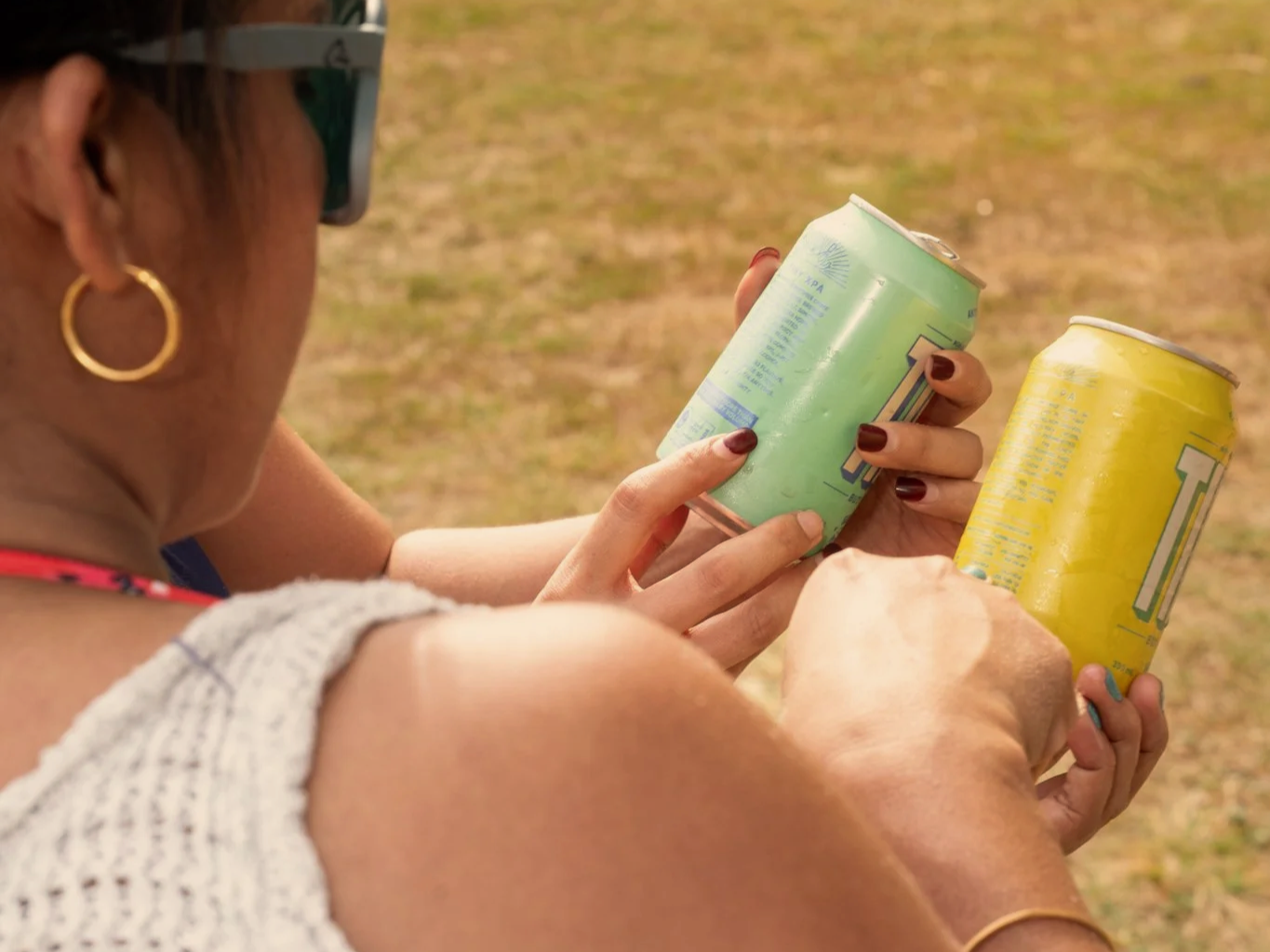
TINY is brewed by Garage Project in Wellington using specialised fermentation techniques that keep alcohol levels very low from the start, rather than removing it afterwards. The result is full-flavoured beer at under 0.5% ABV, with styles like Hazy IPA, Everyday IPA, Anytime XPA, and Lager with Lime designed to match the same kinds of drinking occasions you’d normally associate with regular beer — just without the 4–6% alcohol load that usually comes with them.
Seen in the context of everything above, it’s not about replacing beer. It’s about recognising that different ABVs suit different situations, and sometimes you want the taste, ritual, and refreshment of beer without the cumulative effect of regular-strength alcohol. Because sometimes you want the 5%. And sometimes you want the beer — just TINY on the alcohol.
Drink TINY, celebrate mighty!