
By Jimmy C.
There was a time when handing someone a cloudy beer might have earned you a concerned look. Beer was supposed to be clear, bright, and polished! Then the Hazy IPA arrived and basically ignored the rulebook.
Instead of clarity, there was HAZE. Instead of putting sharp bitterness front and centre, brewers leaned into tropical aromas, juicy hop character and a softer drinking experience. What initially looked unconventional became one of the most recognisable styles in modern craft beer. And its appeal goes beyond appearance.
The Hazy IPA sits at an interesting intersection: expressive enough for serious craft beer drinkers, approachable enough for people who find traditional IPAs too bitter, and visually distinctive enough to have become almost a category of its own.
There's a reason the haze stuck around.
Read More: TINY Hazy IPA Flavor Profile: A Journey Through Taste and Aroma
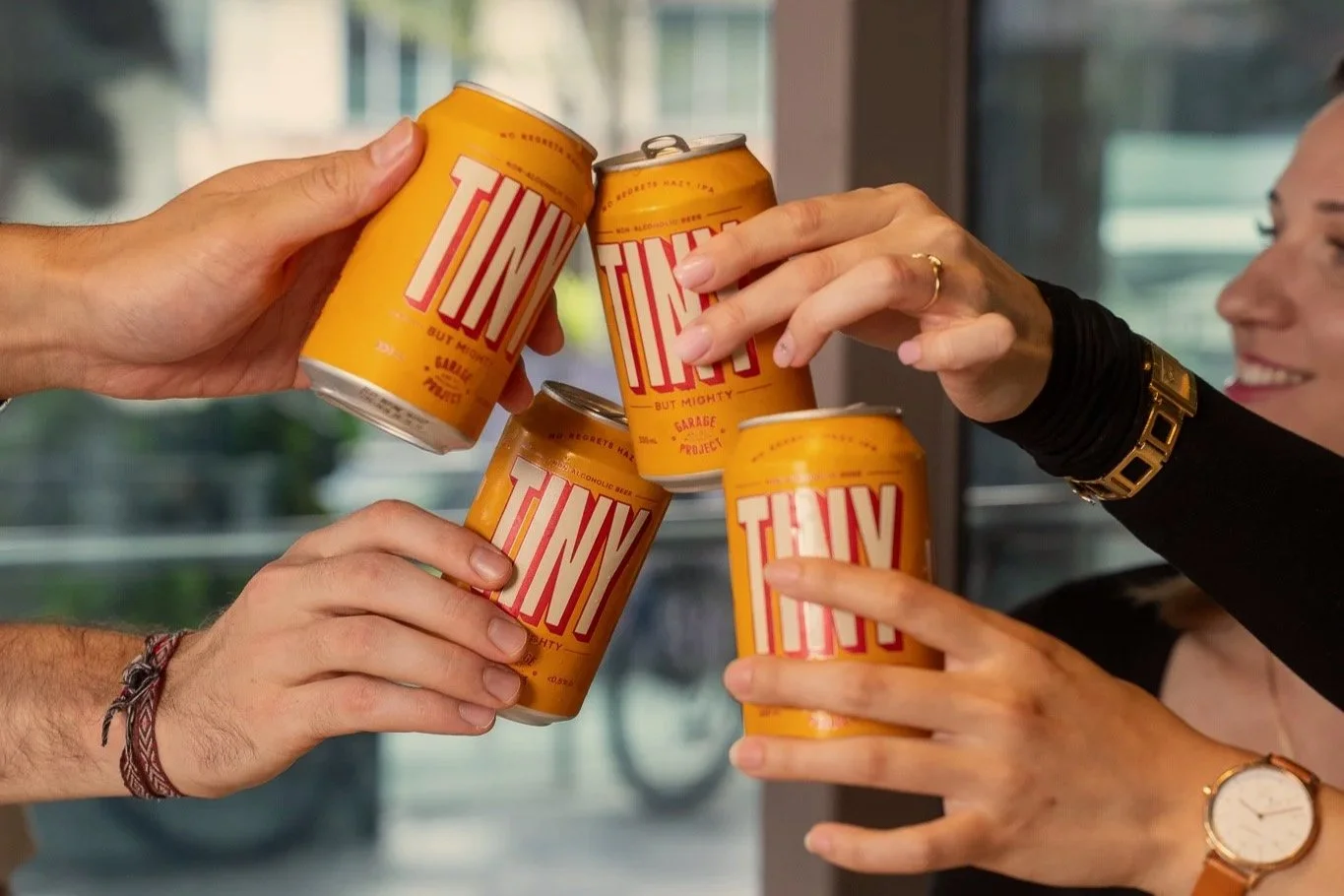
THE IPA CHANGED — AND MORE PEOPLE CAME WITH IT
Traditional IPAs built their reputation around hops. Often, that meant bitterness - we mean, big bitterness. The kind of bitterness that made enthusiastic craft drinkers very happy and occasionally left everyone else wondering whether their taste buds had done something wrong.
The Hazy IPA approached hops differently. Brewers increasingly focused on extracting aromatic and flavour compounds that bring out tropical fruit, citrus and stone-fruit character while managing bitterness more carefully. The result was still recognisably an IPA; just a softer, more aromatic interpretation of one.
That distinction widened the audience. Someone who didn't particularly enjoy an aggressively bitter IPA could suddenly find themselves drinking something bursting with mango, passionfruit, pineapple or citrus notes. Same ingredient doing much of the work, but with a very different experience.
That's one reason the Hazy IPA became more than a niche brewing experiment. It made hops accessible without making them boring.
THE HAZE ISN'T JUST THERE FOR THE PHOTO
'Drink responsibly' was crafted in an era when the drinking calculation was simpler: you either drank, or you didn't. Moderation was framed as a volume issue: how many drinks, how fast, how often. The message assumed that alcohol was the constant, and responsibility was the variable you adjusted around it.
That framework made sense when the options were limited. You ordered a beer or you ordered water. You drank at the bar or you stayed home. The advice was straightforward because the choices were binary.
But consumer behavior doesn't stay frozen. According to a Beer Institute survey, 61% of Gen Z and Millennial consumers say they'd choose a non-alcoholic version of their favorite beer: not as a punishment, but as a genuine preference in certain contexts. These aren't people who've stopped drinking, they're people who've added a third option to the calculation.
The old message wasn't wrong. It just wasn't built for a world where drinking deliberately means something different than drinking less.
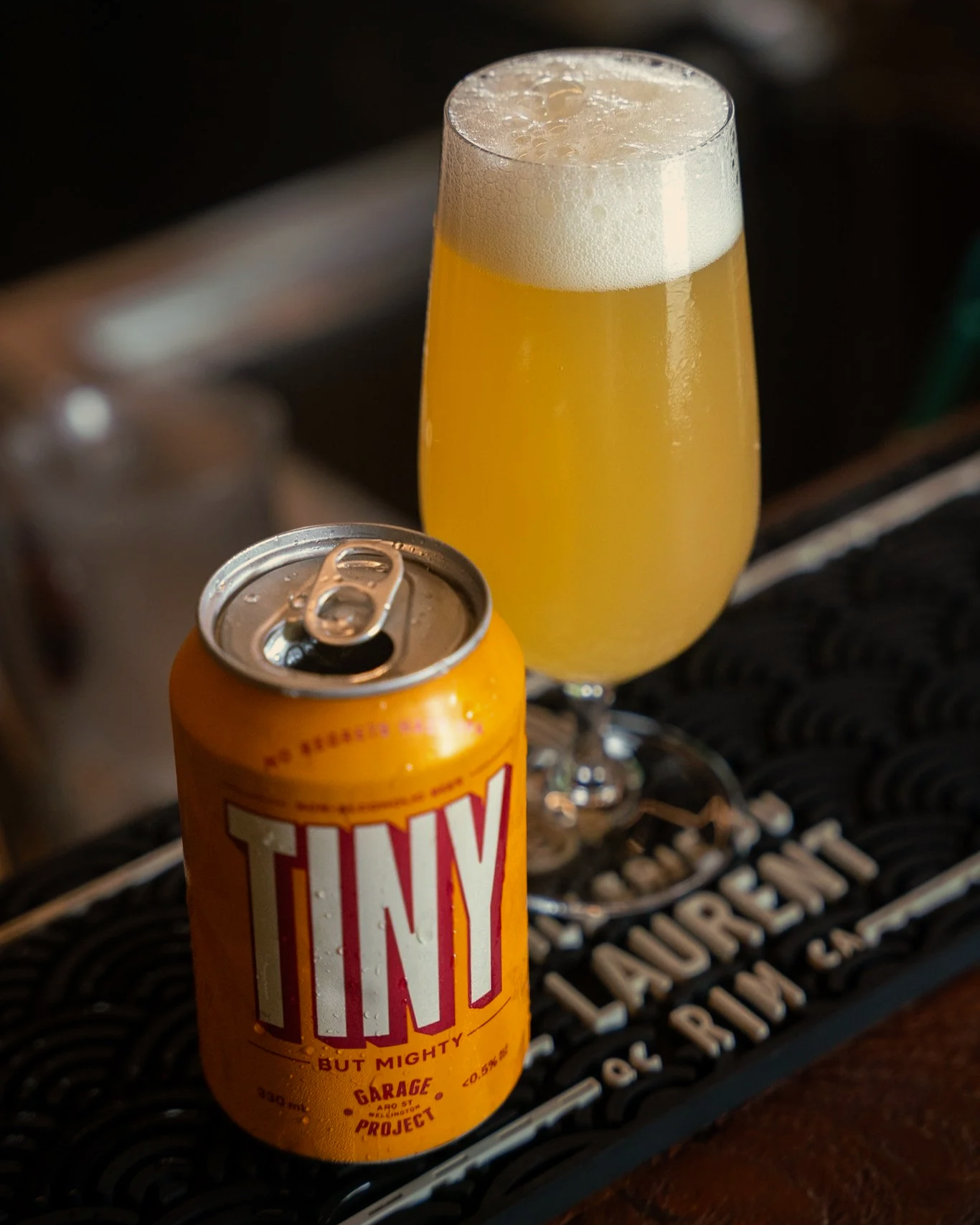
AROMA BECAME AS IMPORTANT AS BITTERNESS
One of the biggest changes Hazy IPAs brought to modern IPA culture is where the experience starts - before the sip. Bring a good Hazy IPA towards your face and the hops have already started doing their job.
Modern hop varieties can produce intensely aromatic profiles associated with citrus, tropical fruit and stone fruit. Brewing techniques such as late hopping and dry hopping allow brewers to showcase those characteristics without extracting the same level of bitterness that comes from boiling hops for longer periods. The result feels almost immediate: mango, citrus, passionfruit, pineapple.
Different hops produce different combinations, but the idea is the same: beer can be deeply hop-driven without bitterness dominating the entire experience. And in a drinks market where consumers increasingly care about flavour exploration, that has proved to be a particularly useful formula.
IT ALSO FITS HOW PEOPLE DRINK CRAFT BEER NOW
Part of the Hazy IPA's rise is technical, another part of it is cultural. Craft beer isn't consumed only by the kind of drinker who wants to discuss bitterness units at the bar anymore. People expect variety, with more drinkers looking for options that range from bold and experimental to light, refreshing, and easy to enjoy in different social settings.
They want something distinctive but approachable. Something interesting enough to order at a specialist beer venue but easy enough to enjoy over dinner. Something recognisably craft without requiring an education before the first sip.
The Hazy IPA does that unusually well. It's expressive without necessarily being aggressive. That matters in places like Singapore, where craft beer increasingly sits alongside restaurant culture rather than existing exclusively in dedicated beer spaces. A tropical, aromatic Hazy IPA can work with food, it can work at an afternoon event, and it can work at dinner. And in Singapore's climate, something served cold with bright fruit-forward hop character has a fairly obvious advantage. The style arrived at exactly the right moment.
THEN NA BEER MADE THE CHALLENGE MORE INTERESTING
There's one complication: a Hazy IPA is not an easy beer to recreate at very low alcohol because alcohol contributes to body and the overall sensory structure of conventional beer, so when you reduce it significantly the weaknesses become much easier to notice, including thin mouthfeel, muted aroma, too much sweetness, and bitterness without enough body underneath it.
For a style defined by aroma and softness, those challenges are hard to disguise. That’s why the emergence of genuinely good Hazy NA beer matters so much. The question is no longer simply whether a brewery can produce something cloudy at <0.5% ABV — it can. The real test is whether it can retain enough of what made people fall in love with Hazy IPA to begin with, and that’s a much higher bar.
TINY HAZY IPA STARTS WITH THAT EXACT QUESTION
When Garage Project developed TINY Hazy IPA, the goal wasn’t to create a generic non-alcoholic beer and simply label it as an IPA. The style still needed to feel authentic, delivering the core expectations people associate with a Hazy IPA: vibrant tropical hop character, a soft and fuller body, and a balanced bitter finish that sits underneath the fruit-forward profile.
To achieve this, Garage Project uses specialised fermentation techniques that keep TINY below 0.5% ABV from the brewing stage itself, rather than producing a full-strength beer and removing the alcohol afterwards. This approach is especially important for a style where aroma, hop expression and mouthfeel are central to the drinking experience.
Because ultimately, nobody reaches for a Hazy IPA for the technical novelty of its haze. You choose it for the flavour, the aroma, and the way it feels to drink, and TINY is built to preserve exactly that experience, just without the alcohol.
WHY HAZY IPA AND SINGAPORE MAKE A GOOD MATCH
There’s something especially natural about the rise of Hazy IPA in Singapore, where its tropical, fruit-forward character fits the climate almost perfectly. Designed to be enjoyed ice-cold, it feels right at home in hot, humid weather.
Its softer bitterness also makes it highly food-friendly. Hazy IPAs pair well with bold dishes like fried chicken, grilled meats, curries, burgers and spicy sharing plates, enhancing rather than overpowering flavour.
With TINY Hazy IPA, that versatility goes further. At <0.5% ABV, it removes the expectation that beer is only for traditional drinking occasions, opening it up to more everyday moments. Lunch, afternoons and long dinners all become easier. It reflects a shift in Singapore drinking culture — not away from beer, but towards more intentional drinking. In that context, a Hazy IPA that happens to be NA has far more places to belong.
THE BEST TRENDS USUALLY SOLVE SOMETHING
Plenty of beer styles have their moment in the spotlight. Some endure, becoming staples of the craft beer world, while others fade once the novelty wears off. The Hazy IPA has proven to be one of the more lasting innovations because it solved multiple challenges at once.
It made hops more approachable, shifting the focus from bitterness to aroma and flavour. It also created a distinct visual identity and proved highly versatile, working well across different food pairings. At the same time, it gave brewers a wide creative canvas to experiment with new hop combinations and techniques.
Now, the next evolution may be emerging at the other end of the ABV spectrum. If modern non-alcoholic beer can successfully deliver the same tropical aroma, body and hop character people expect from a Hazy IPA, then the style opens up to entirely new drinking occasions.
That’s where TINY comes in. Not by replacing the love for Hazy IPA, but by expanding when it can be enjoyed. Tropical, juicy, hoppy and full-bodied — all at 79 calories and <0.5% ABV. The haze stays. The alcohol gets TINY.
Drink TINY, celebrate mighty!