
By Jimmy C.
Let me be upfront about something before we get into this.
Writing a flavour profile post for a beer you genuinely rate is a slightly uncomfortable exercise. There is always a risk it reads like a menu description or, worse, like marketing copy dressed up as enthusiasm. So I am going to try to do something different here: explain what is actually in the can, why those ingredients do what they do, and what that means when you crack one open.
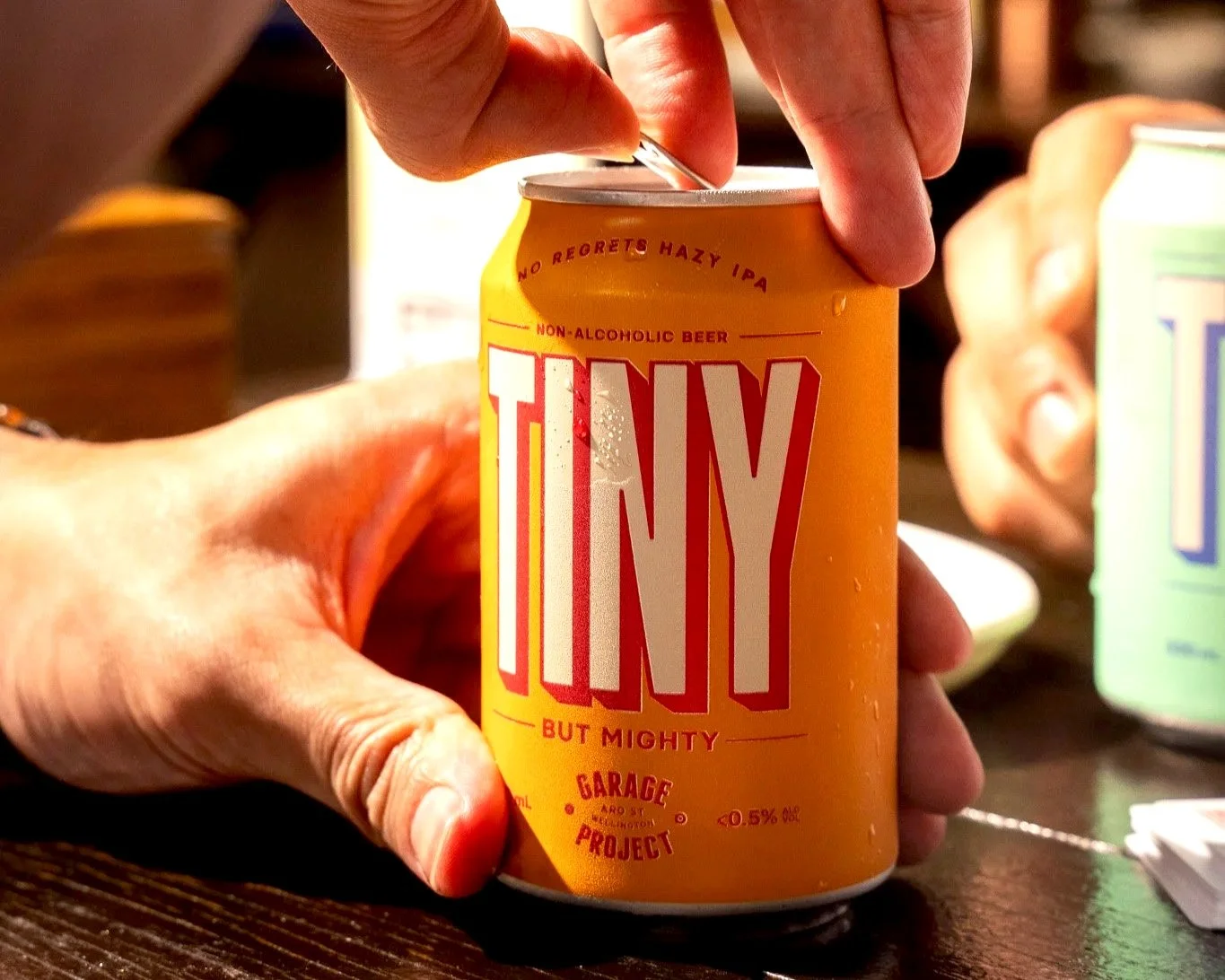
Because the TINY Hazy IPA is worth taking seriously. And taking something seriously means going beyond the words on the label.
Read More: Why Hazy IPAs are the Hottest Trend in Craft Beer
First, What Is a Hazy IPA?
For anyone who has not spent the last decade obsessing over craft beer styles, a quick primer.
The Hazy IPA, also called a New England IPA or NEIPA, is one of the most significant style innovations in modern craft brewing. Unlike the West Coast IPA, which is typically clear, bitter, and piney, the Hazy IPA is defined by a deliberately murky, opaque appearance, a soft and pillowy mouthfeel, and an aroma profile that leans heavily into tropical fruit rather than resinous bitterness.
The haze itself comes from a combination of factors: high levels of proteins from oats or wheat in the grain bill, heavy dry-hopping schedules, and specific yeast choices that leave more suspended material in the finished beer. The style essentially rewired what drinkers expected from an IPA, shifting the emphasis from bitter punch to aromatic abundance.
It is also, as it turns out, one of the hardest styles to replicate at low alcohol. The mouthfeel that defines a Hazy IPA depends partly on those grain proteins, but also on the body that alcohol contributes. Get either element wrong and you end up with something watery and flat, which is exactly what most early NA attempts at the style produced.
Which makes what Garage Project has done with TINY Hazy IPA genuinely interesting.
The Grain Bill: Building the Body
TINY Hazy IPA is brewed with pilsner malt and golden naked oats.
Pilsner malt is a light, clean base malt that provides fermentable sugars without adding much colour or heavy flavour. It keeps the beer pale and lets the hops do the talking, which is exactly the point in a hop-forward style like this.
The golden naked oats are where it gets interesting. Oats are a defining ingredient in Hazy IPAs because they contribute a silky, almost creamy texture to the mouthfeel. Unlike oat flour or flaked oats, golden naked oats are a hull-less variety that delivers the protein and body contribution without adding astringency. The result is a soft, smooth weight on the palate that carries the hop character rather than competing with it.
In a non-alcoholic context, this grain choice matters even more. Because alcohol typically contributes to body and mouthfeel in a full-strength beer, brewing without it requires other ingredients to carry that structural role. The oats in TINY Hazy IPA are doing a significant amount of work to maintain the full, rounded feel that defines the style.
The Hop Trio: Mosaic, Strata, and Simcoe
This is where the flavour story really starts. TINY Hazy IPA uses three hop varieties in combination, each bringing something distinct to the glass.
Mosaic is the lead. Developed by the Hop Breeding Company in 2012, Mosaic quickly became one of the most celebrated aroma hops in craft brewing, named precisely because of the complexity of its flavour profile. The predominant notes are tropical, specifically mango, pineapple, and passionfruit, layered over citrus brightness and softer blueberry and stone fruit undertones. Underneath those fruit notes sit floral and earthy elements that add depth without muddying the aroma. Mosaic is the hop that makes a Hazy IPA smell like a fruit market in the best possible way.
Strata adds the edge. A newer variety developed by Indie Hops and Oregon State University, Strata brings something that Mosaic alone does not: a dank, resinous quality that sits under the tropical fruit and gives the aroma real complexity. The dominant Strata notes are passionfruit and grapefruit, but there is also a distinctive herbal, almost cannabis-like depth that stops the beer from being purely sweet and keeps it feeling like a serious hop-forward beer rather than fruit juice. It is the hop equivalent of bass in a mix, you do not always notice it consciously but you feel its absence immediately.
Simcoe anchors the bitterness. One of the foundational American aroma hops, Simcoe brings citrus, apricot, and berry brightness on the aroma side, and contributes the firm but clean bitterness that gives the beer its IPA backbone. Where Mosaic and Strata drive the aroma experience, Simcoe ensures the finish has structure rather than trailing off into sweetness. It is also the parent variety of Mosaic, which means the two hops share certain aromatic compounds and layer together naturally.
Together, the three hops create a profile that is greater than the sum of its parts: big tropical aroma from Mosaic, depth and complexity from Strata, and structure and bitterness from Simcoe. The aroma explodes on pour. The palate gets punchy citrus first, then the tropical fruit character, then a mild, clean bitter finish that wraps up without lingering too long.
What Arrested Fermentation Does to a Hazy IPA
Here is the part that most beer writing glosses over, and it is actually the most important part of the TINY Hazy IPA story.
The hop compounds that create the tropical aroma in a Hazy IPA are volatile. They are literally trying to escape the liquid, which is why a fresh can smells so intensely and why a can that has been sitting warm for too long starts to lose that brightness. In a conventional dealcoholised NA beer, the processes used to remove alcohol, particularly heat evaporation, also destroy these volatile compounds. The aroma that makes a Hazy IPA worth drinking gets stripped out alongside the ethanol.
Garage Project's approach using arrested fermentation techniques sidesteps this entirely. Because the alcohol is limited through fermentation control from the start rather than removed after the fact, the volatile hop aromatics that were built during dry hopping are never subjected to the kind of processing that would damage them. The Mosaic, Strata, and Simcoe compounds that give TINY Hazy IPA its tropical intensity survive into the finished beer intact.
This is why the aroma profile of TINY Hazy IPA holds up in a way that most NA attempts at the style simply do not. It is not that Garage Project added more hops to compensate for lost aroma. It is that they used a process that did not destroy the aroma in the first place.
Serving and Drinking It
A few notes on getting the most out of TINY Hazy IPA, because these things matter.
Serve it cold, but not ice cold. Around four to six degrees celsius is ideal. Too cold and the aroma closes up, which defeats the purpose of a hop-forward style. Let it sit for two minutes after pouring and the tropical notes will open up noticeably.
Pour it with a gentle tilt, not directly into the bottom of the glass. The haze in a Hazy IPA is part of the experience and a rough pour can overdisrupt the suspended proteins and dry hop material that create both the appearance and the mouthfeel.
Drink it fresh. This is not a beer that benefits from cellaring. The hop aromatics in any Hazy IPA are at their peak in the first few weeks after canning, and TINY is no different. If you have them in the fridge, work through them within a month or two of purchase.
It sits at 79 calories per 330ml can and under 0.5% ABV, which means you can have one before a training session or on a Tuesday evening without giving it a second thought. That is the practical dimension. The flavour dimension is the tropical fruit aroma, the soft oat-driven mouthfeel, the citrus-forward palate, and the clean finish that does not overstay its welcome.
The Honest Assessment
The test I apply to any NA beer is simple: would I choose this if the full-strength equivalent were also available? Not would I settle for it, would I actually choose it.
For TINY Hazy IPA the answer is yes, and specifically on the occasions where the Hazy IPA experience is what I am after. The hop aroma is genuinely there. The mouthfeel holds up. The finish is clean. It delivers the defining characteristics of the style.
There is a review from a verified purchaser at Sans Drinks that captures it well: as true a Hazy IPA as I have ever had, without all the hassle of having alcohol in it. That is the bar. And it clears it.
If you are curious about what a non-alcoholic beer can actually achieve when the brewing is taken seriously, TINY Hazy IPA is the one to try first.
Bright and hoppy days ahead.