
By Jimmy C.
Nobody sent out a memo. Nobody organised a campaign. It just sort of happened.
HYROX events started selling out in minutes. Running clubs became the new networking event. Padel courts in Singapore are booked weeks in advance. The 6am alarm that used to feel like punishment is now, for a lot of people, something they actually look forward to.
At some point in the last few years, the cultural calculus around how people spend their time and what they put in their bodies quietly shifted. And the hangover, that old badge of a good night out, started looking less like a war story and more like an own goal.
The Numbers Are Hard to Ignore
HYROX reached 1 million tickets sold in May 2025, the fastest growing sport globally, up from just 650 participants at its first event in Hamburg in 2017. In Singapore specifically, total HYROX participants across all Singapore events has now passed 45,000, with the April 2026 edition alone drawing 11,489 athletes.
Globally, padel is now played in over 165 countries, with more than 7,000 new courts built in 2024 alone, an average of one new court every two hours. In Singapore, the first padel courts appeared in 2021 on the Marina Square rooftop, and the sport has been expanding rapidly since, with new venues opening across the city.
These are not niche hobbies anymore. They are the social infrastructure of a generation that has decided performance and participation are not mutually exclusive, and that the Sunday morning long run matters enough to protect it from Saturday night.
The Drinking Picture Is More Complicated Than It Looks
Here's where it gets interesting, and where a lot of the commentary gets it slightly wrong.
The story of the fitness generation and alcohol is not simply that young people stopped drinking. According to a 2025 IWSR study of 26,000 respondents across 15 markets, 73% of Gen Z surveyed had consumed alcohol in the past six months, up from 66% in 2023. The generation that popularised the sober curious movement is now more likely than any other generation to say they are actively choosing to drink more.
So the narrative of total abstinence does not quite hold up. But something else is clearly happening. According to Leger's 2025 Beyond the Buzz study, a quarter of Gen Z and Millennials who currently consume alcohol plan to cut back in 2025. Not stop, but cut back. The behaviour that is actually shifting is not whether people drink. It is when, why, and how much thought goes into it.
That is a meaningfully different thing. It is not ideology. It is optimisation.
The PR Is the New Pint
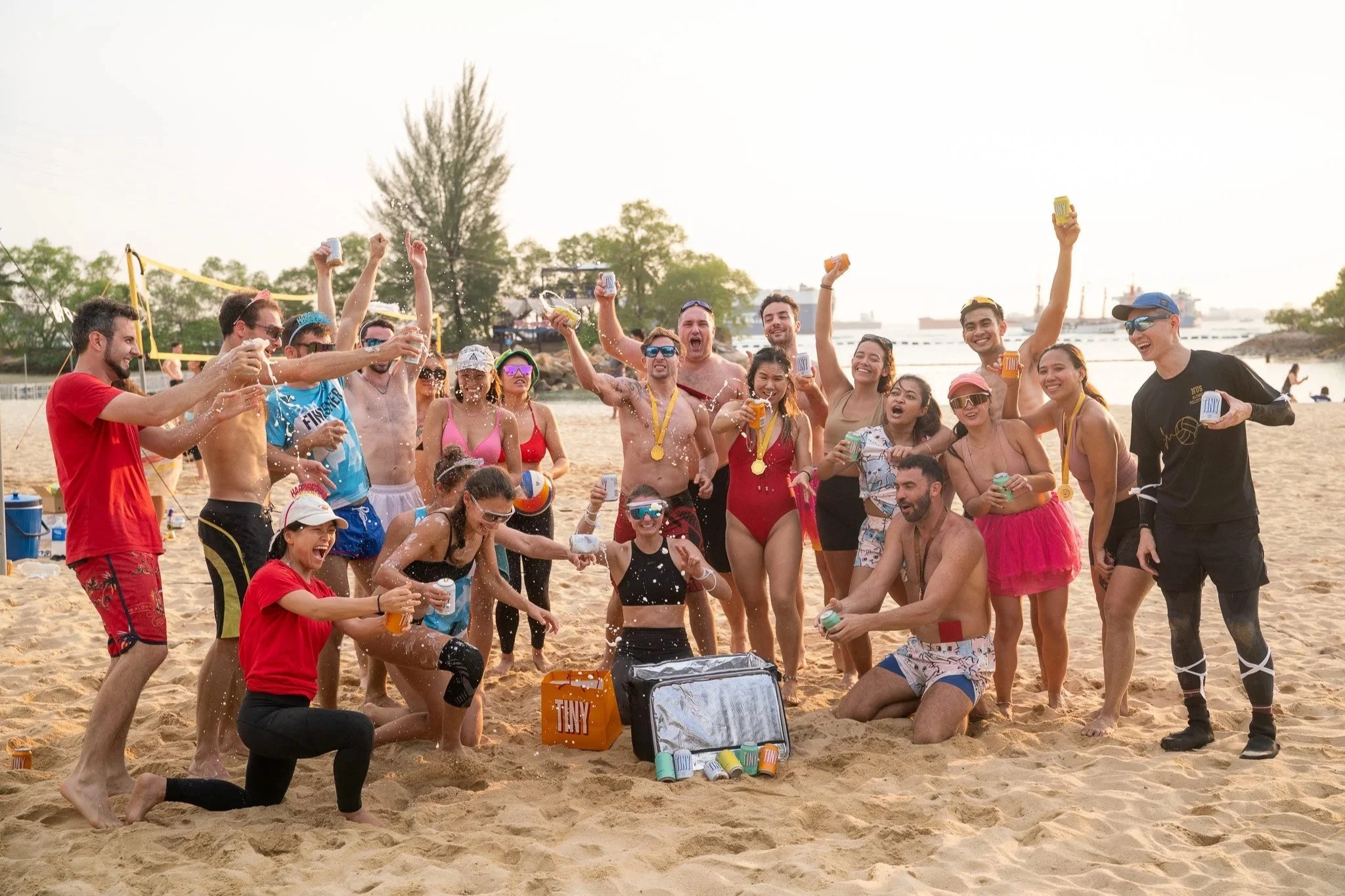
If you spend any time around the fitness community in Singapore, the HYROX crews, the running clubs that meet at 6am at Marina Bay, the padel regulars who have somehow made a racquet sport feel like mandatory social activity, you notice something.
The conversations that used to happen over drinks are now happening over training. The social bonding that used to require a bar is now happening at a start line or a finish line. The shared experience that made going out feel necessary has found new formats, and those formats happen to require you to show up sharp.
That shift creates a specific problem for alcohol. Not a moral one. A practical one.
A 2023 Gallup survey found that the share of adults under 35 who say they ever drink dropped ten percentage points over two decades, to 62% in 2021 to 2023 from 72% in 2001 to 2003. But more revealing than the headline number is the reason. Over a third of non-drinking Gen Zers cited concerns about alcohol's impact on their mental health, and 46% said they are simply not interested in drinking. Not opposed. Not abstaining for a cause. Just not interested, because something else has taken its place.
When your Saturday morning training session matters more than your Friday night buzz, the calculation changes. The hangover is not just unpleasant. It is expensive, in performance terms, in sleep quality, in the hours of the weekend where you are not functioning at full capacity. And increasingly, people are doing that math explicitly.
What This Has to Do With Beer
Here is the thing though. The fitness generation still drinks. They still want to be at the table, at the event, in the social moment. They are not opting out of culture. They are trying to stay in it more fully, which means making smarter calls about what is in their hand.
That is exactly where craft NA beer finds its most natural home. Not with people who do not drink. With people who drink thoughtfully, and who on a Tuesday night before a Wednesday morning run or a Thursday before a HYROX training block, want something genuinely worth drinking that does not compromise what they are building.
Nearly half of US adults planned to drink less in 2025, according to Circana's research, with 43% of Gen Z more likely to try a new drink product if it aligns with the sober curious lifestyle. But the key word is lifestyle, not abstinence. The product has to fit life. And life, increasingly, includes early mornings and performance goals alongside social events and cold drinks after a session.
TINY was built for that person. Brewed by Garage Project using arrested fermentation techniques that preserve the hop character, mouthfeel, and flavour of a proper craft beer, without the ABV that costs you the next morning. Not a consolation prize. Not a workaround. A deliberate choice that fits the way the fitness generation actually lives.
Read More: The Growing Popularity of Non-alcoholic Beer: A Shift in Consumer Attitudes
Maybe the New Flex Is the 6am Run
There is a version of this shift that sounds preachy, the wellness crowd lecturing everyone else about their choices. That is not what is actually happening, at least not among the people I know.
What is actually happening is quieter and more personal. People are finding that they feel better when they train consistently, sleep well, and make more deliberate choices about alcohol. They are not announcing it. They are just, gradually and without making a big deal of it, restructuring their weeks so that the things they care about get protected.
The hangover is ending not because someone decided it was uncool. But because enough people did the maths and realised the trade was not worth it as often as they had been making it. You can still have the Friday night. You can still be at the table. You can still have something worth drinking in your hand.
You just do not have to pay for it on Saturday morning anymore. That is what comes next.
Bright and hoppy days ahead.