
Why the Same Person Doesn't Always Order the Same Beer
By Jimmy C.
Here's something obvious that drinking culture has been slow to actually articulate: the right drink for a Friday night dinner is not the same as the right drink for a Tuesday networking event. Same person. Same taste preferences. Different calculation.
Most people already know this instinctively. They just haven't been given many good options to act on it.
The Occasion Has Always Been Part of the Decision
Beverage choice has never been purely about preference. It's about reading the room — the time of day, who you're with, what's been scheduled for the next morning, how long you need to stay present and sharp.
The data is starting to reflect what people already know from lived experience. IWSR's Bevtrac 2024 report found that across 15 key markets, the average number of beverage categories consumed per drinking occasion dropped from 2.4 in 2023 to 1.8 in 2024. More significantly, 66% of occasions now involve just one category of drink — up from 49% the previous year. People are making more deliberate, singular choices about what they consume in a given context.
That's not abstinence. That's precision. And it points to something important: the occasion is increasingly the deciding factor, not just the mood or the habit.
When Two Calendars Run at the Same Time
The tension is particularly visible in cities like Singapore, where the professional and social calendars don't take turns — they run simultaneously, at pace, with very little slack between them.
A Tuesday evening industry event flows directly into a Wednesday morning strategy session. A client dinner precedes a presentation that determines the quarter. A team celebration happens the night before an early regional call. These aren't unusual combinations. They're just Tuesday.
The old default in these situations was simple: you drank when the social context called for it, and you managed the consequences later. What's changing is that more people are recognising the trade-off isn't mandatory. That the social participation and the next-morning performance don't have to be in conflict — if you have a genuinely good option that allows you to do both.
The Product Gap That Held the Behaviour Back
Context-aware drinking — choosing different options for different occasions — isn't a new idea. People have always done it in theory. The problem was that the practical option for 'Tuesday evening when I need to be sharp tomorrow' used to be sparkling water or something vaguely beer-flavoured that reminded you what you were missing.
For most of NA beer's history, choosing it at a social event was itself a compromise — not just on ABV, but on the entire experience. The old brewing methods stripped out the volatile aromatic compounds that give beer its character along with the ethanol. You'd get something thin, flat, and slightly hollow.
That gap between the behaviour people wanted to adopt and the product available to support it is why occasion-based NA beer choice remained niche for so long. The cultural permission was there before the product was.
What Fills the Gap Now
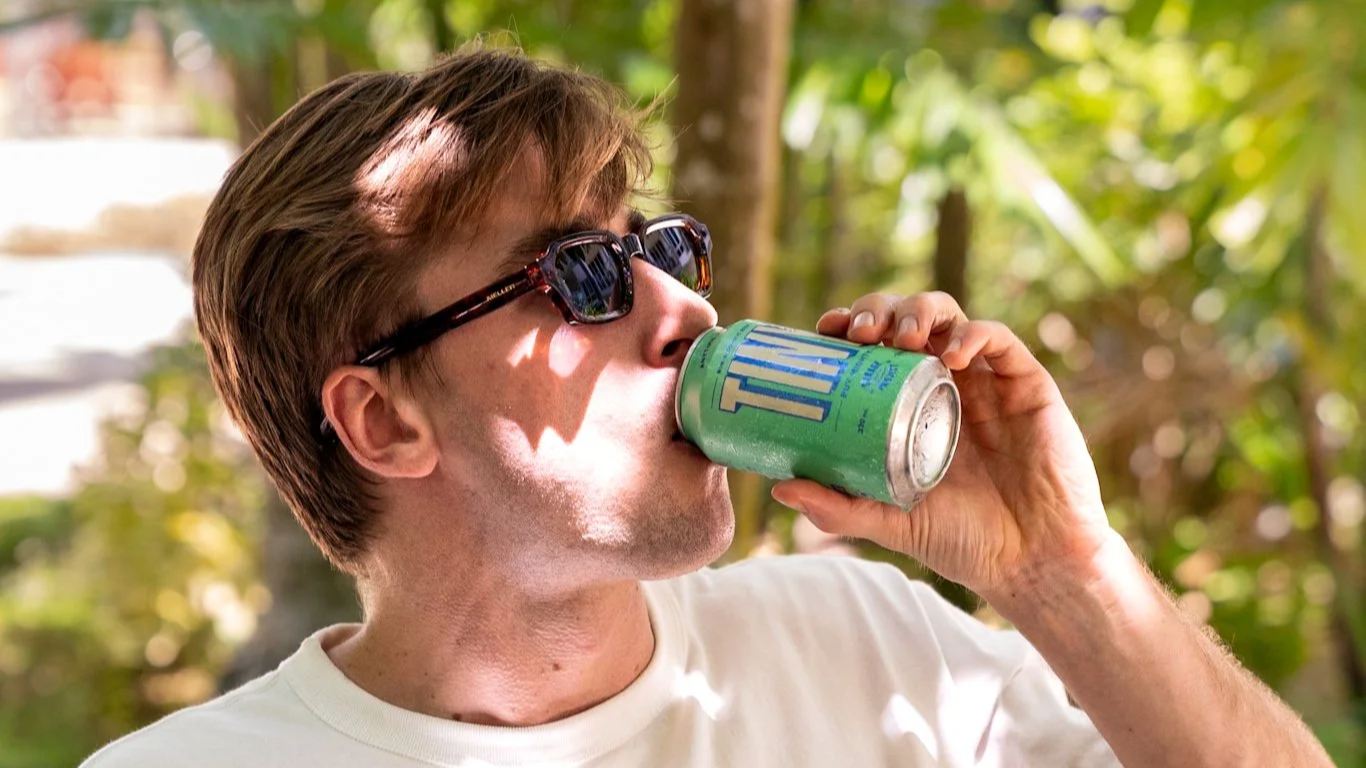
Garage Project's approach to brewing TINY is specifically what makes the occasion-led choice workable in practice.
By using specialised fermentation techniques — including methods akin to arrested fermentation — rather than post-process dealcoholisation, the beer is brewed for its final form from the start. The fermentation is carefully managed to prevent significant alcohol from developing, while preserving the hop aromatics, body, and mouthfeel that make the beer worth drinking. Nothing gets stripped. Nothing needs to be reconstructed afterwards.
The result is a craft beer that holds up at a social event. That you reach for because you want it, not because it's the least-bad available option. That fits the Tuesday evening occasion the same way a well-chosen full-strength craft beer fits the Friday night.
What the Choice Actually Communicates
There's a social dimension to this worth naming.
For a long time, ordering an NA beer at a professional dinner or networking event carried a certain friction — it invited questions, required explanation, or created a slight awkwardness that simply didn't exist with the default.
That's shifting. According to Penn State consumer trend analysis of 2024 data, 67% of consumers said NA options help them 'prioritise their physical health while not missing out on social opportunities' — and 74% said they make it 'easier for everyone to enjoy social occasions together.'
When enough people at the table are making deliberate choices about what they drink and when, the choice stops feeling like an exception. It starts feeling like what it actually is: a considered decision about how to show up — at the event, and the morning after.
The Same Person, the Right Beer
The person who drinks TINY on Tuesday and a full-strength IPA on Friday isn't inconsistent. They're calibrated. They understand that different occasions have different optimal answers, and they've got a product worth choosing for both ends of that spectrum.
That's the shift. Not drinking less as a moral position. Not abstinence as a lifestyle. Just the practical recognition that the Tuesday evening event and the Friday celebration call for different calculations — and that a genuinely good NA craft beer finally gives you something worth reaching for when the calculation tips that way.
If you've tried NA beer before and been underwhelmed, the product gap that made the occasion-based choice feel like settling has closed. What you remember isn't what's being made today.
Bright and hoppy days ahead.